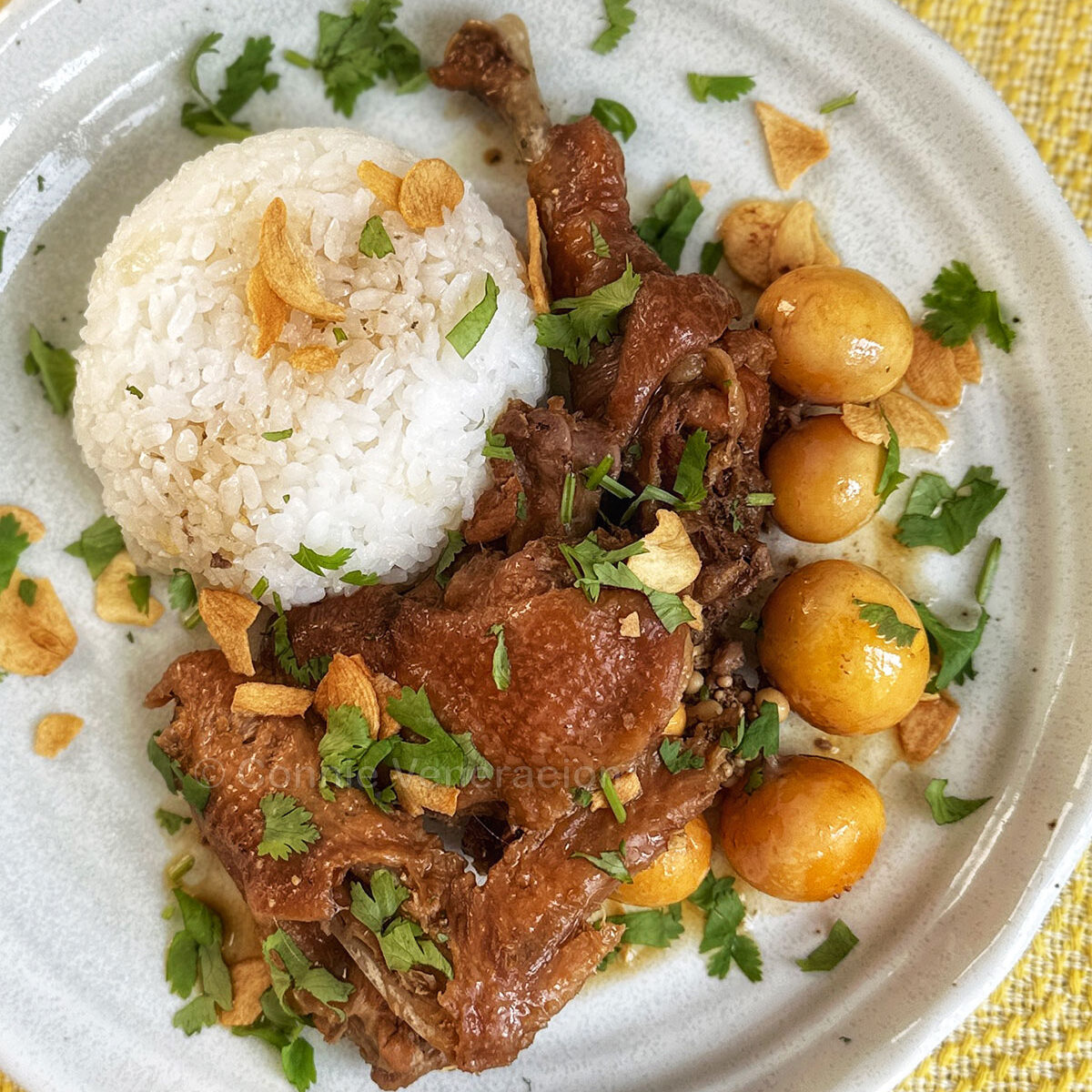
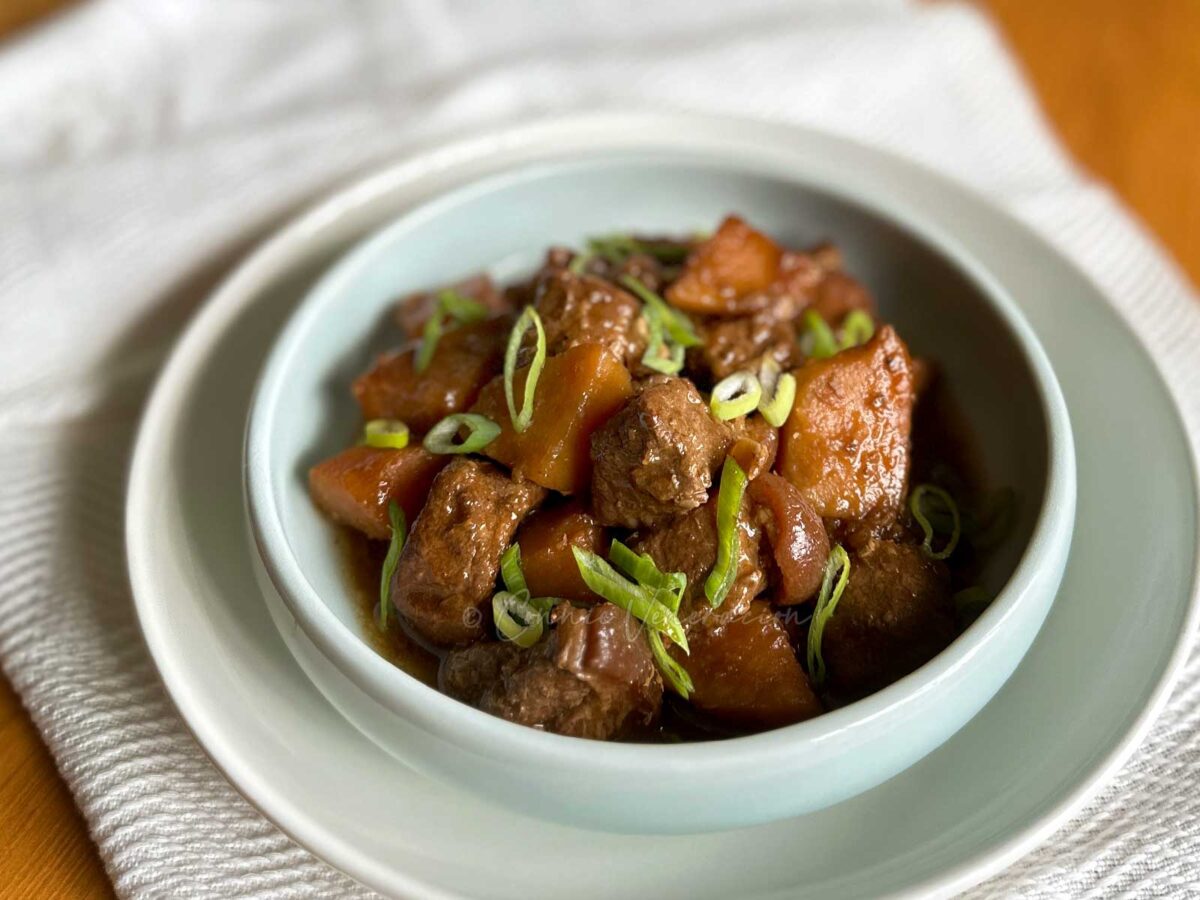
As a rule, I don’t. I’m a fan of the intense garlic flavor and bold sour-salty combination that make traditional Filipino what it is. Then, I was introduced to this technique of balancing the intense acidity by stirring in a bit of sugar to the stew. It made adobo different. Not bad, not better. Just different. And I got over the aversion to add something sweet to adobo. Not sugar in its raw form though. I prefer sweet potatoes (in the photo), pineapple, peanut butter… But more on that later. Let me tell you first about that night when a young man hovered while I was cooking adobo at home and asked if I wasn’t going to add some sugar.
It was during the time when my younger daughter, Alex, and her classmayes were preparing for their class thesis. Alex was studying Technical Theater and the thesis was a production of Tennessee Williams’ The Glass Menagerie in Filipino. Production meant doing pre-production work, staging the play, marketing the ticket sales, and taking care of the post-production as well. Her class held overnight bull sessions and some of these took place in our Antipolo house.
During these overnighters, I fed a dozen or so college kids in their 20s. More boys than girls. Dinner, breakfast, snacks…One evening, they requested pork adobo. A few of them drove to the grocery to buy the pork because, obviously, I never kept a stock of pork in the freezer for a dozen people. We’re a family of four and my older daughter, Sam, didn’t even consume red meat (she still doesn’t).
They deposited the pork on the kitchen island, I took out my largest pan and started cooking. As I was adding the spices and seasonings, one of the kids, Mickey, was standing beside me and chatting me up. Then, he said, “You’re not adding sugar?” I paused, looked at him sideways, and replied. “Sugar? In adobo?” Some of the other kids heard, and a few exclaimed, “Yes, please, a little sugar!” Well, they were the ones who were going to eat the adobo so, sure, I stirred in a heaping tablespoon of sugar. I figured that wasn’t a lot for three kilograms of pork.
Like I said before, the adobo wasn’t bad, wasn’t better, just different. Maybe sweetening adobo wasn’t even something genuinely new because Filipinos have been cooking adobo with coconut milk (or cream) for as long as I can remember and coconut milk is naturally sweet. So, here are recipes for adobo dishes sweetened with various ingredients.
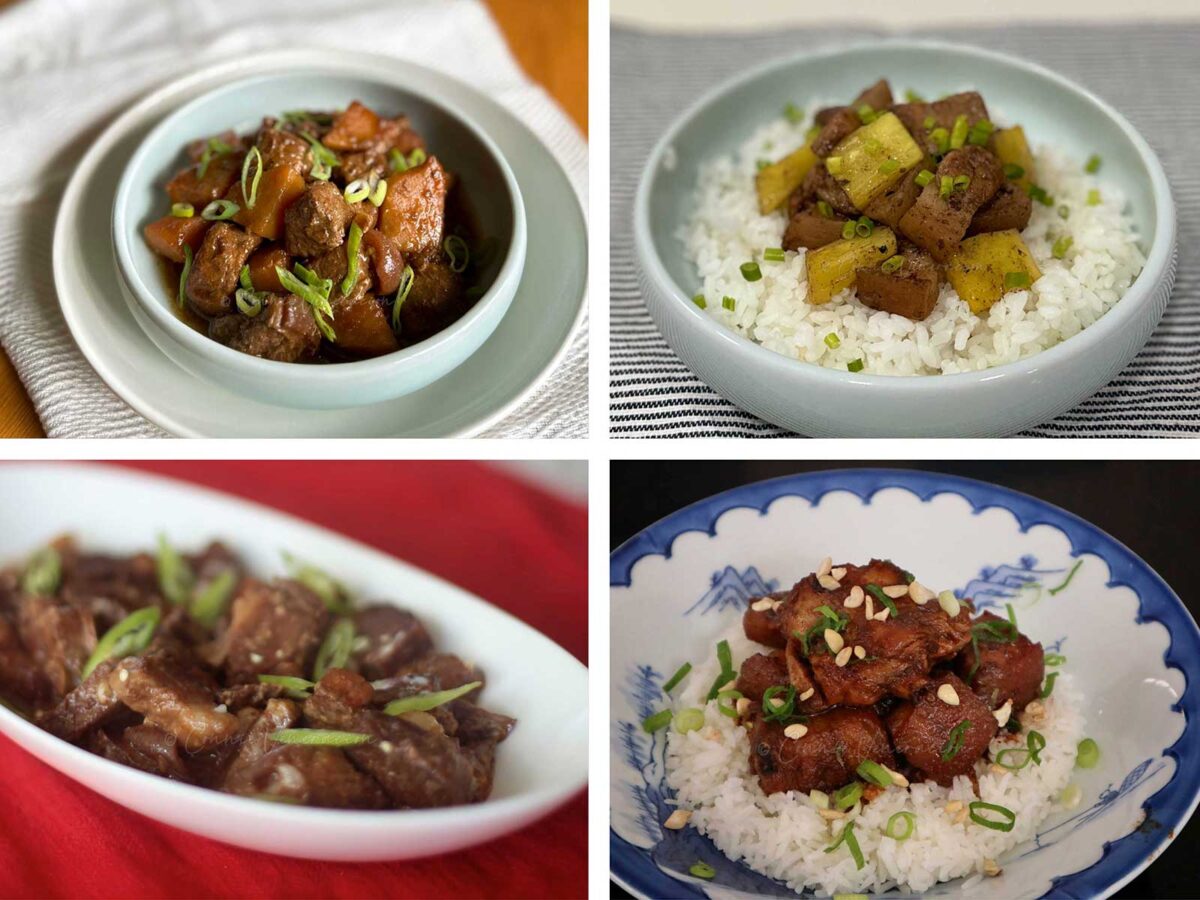
- Pork adobo with sweet potatoes (cook adobo the usual way and just add fried sweet potatoes during the last five minutes of cooking)
- Balsamic pork and pineapple adobo
- Pork adobo with chili and coconut cream
- Pork and chicken adobo with sweet peanut butter sauce
If you’re into something really different, here’s a recipe that I have just resurrected.
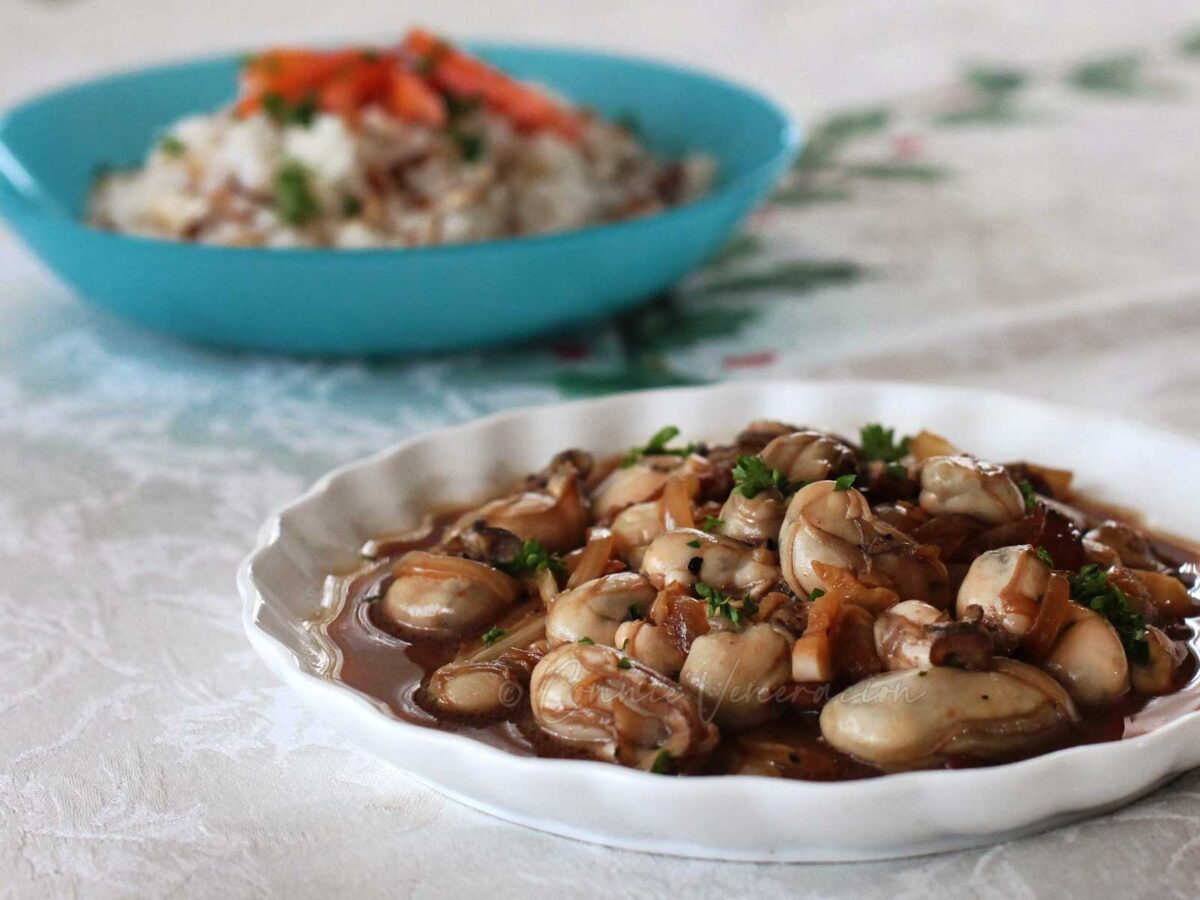
Oyster adobo. With Filipino food bloggers going gaga over Jordan Andino’s chicken adobo with oyster sauce, I decided to bring back a recipe I published back in 2013.
See my oysters adobo recipe.