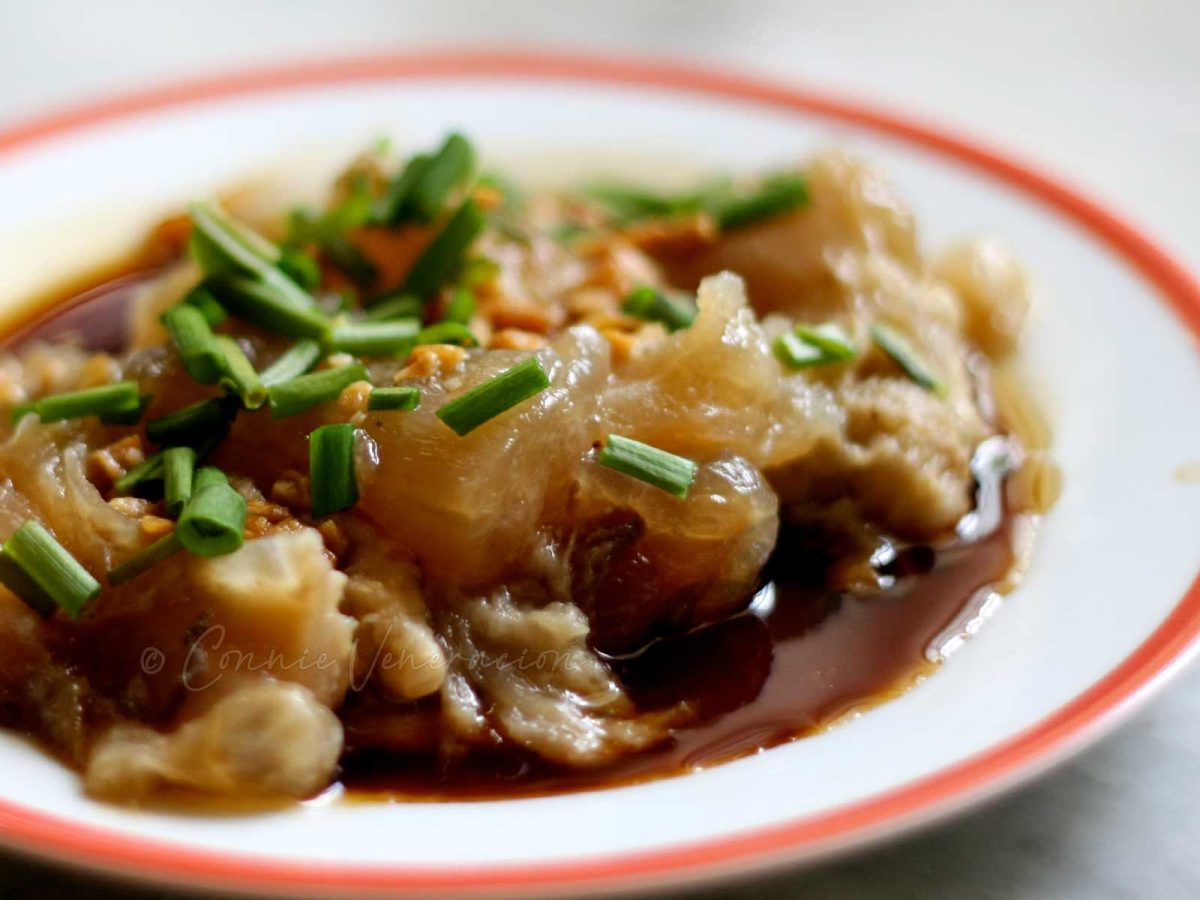
It’s prized in Asian cuisines for its soft, sticky, slimy, chewy texture that mimics the mouthfeel of fatty beef cuts after long hours of cooking. But beef tendon is low in fat. It is, however, rich in collagen. Outside Asia, it burst into popularity during the peak of the keto diet fad.
What exactly is tendon?
Also called sinew, tendon is a dense, tough, non-elastic fibrous tissue that connects muscle to bone. It looks like a rope and is often taken from the shank.
Ligament, also a sinew wrapped around joints, connects bone to bone and is more elastic.
Despite the difference in biological function, tendon and ligament are cooked in pretty much the same way. They require long hours of slow cooking to break down the tough fibers until melt-in-the-mouth tender.
I prefer to simmer beef tendon in the slow cooker
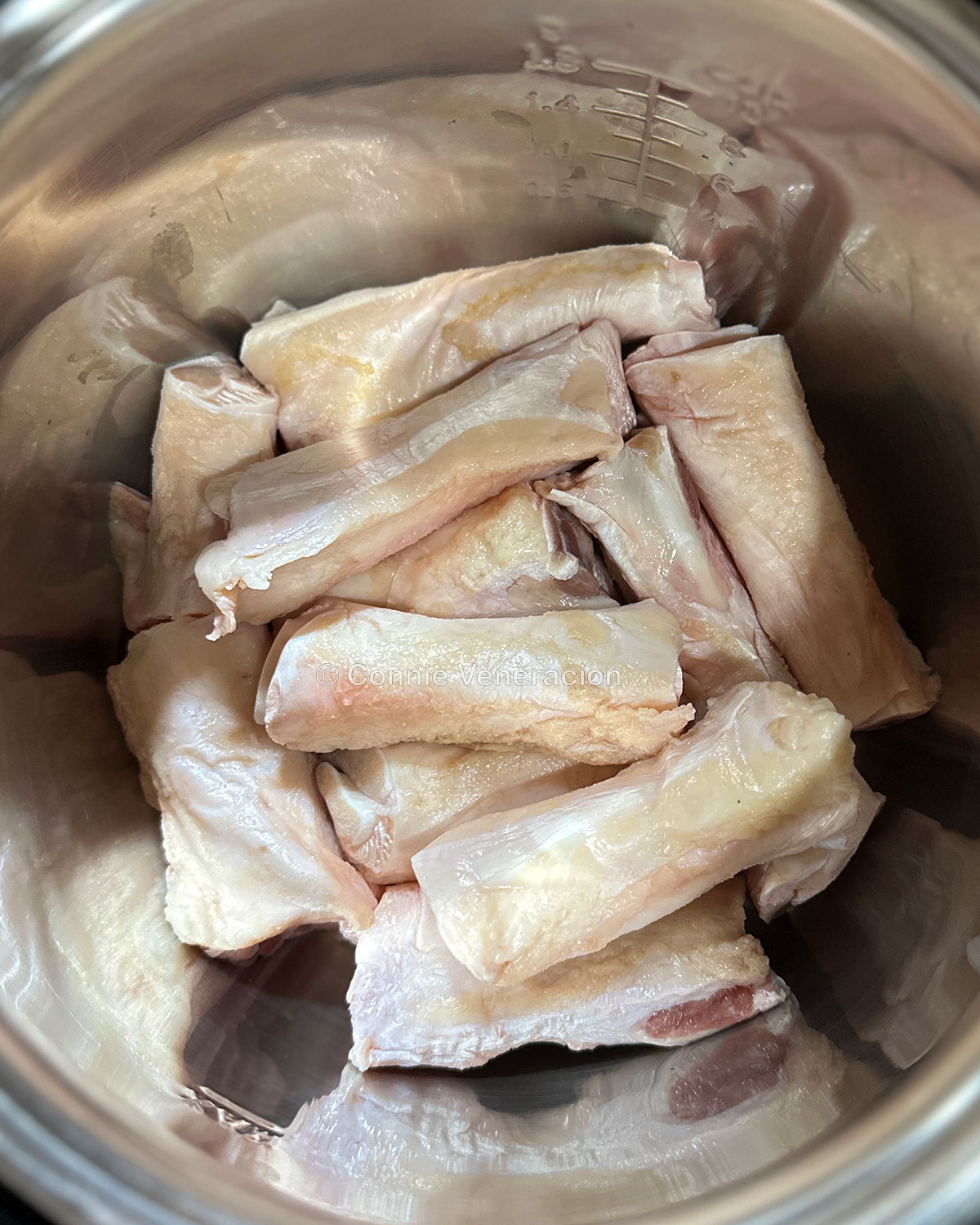
In Asia where it is a delicacy, fully trimmed beef tendon is sold by weight. Rinse well, soak in salty water for about half an hour to loosen any remaining impurities, rinse once more then drop into the pot.
Yes, you can cook tendon in a regular pot but you’ll have to add more liquid from time to time to replace what is lost by evaporation. A slow cooker makes the task easier because very little steam escapes and most of what evaporate just fall back into the cooker in the form of condensation.
Cook tendon in broth, not water
While tendon will simmer to tenderness in the company of any liquid, I prefer to use broth unless I am cooking the tendon with chunks of bone in order to create a more flavorful broth.
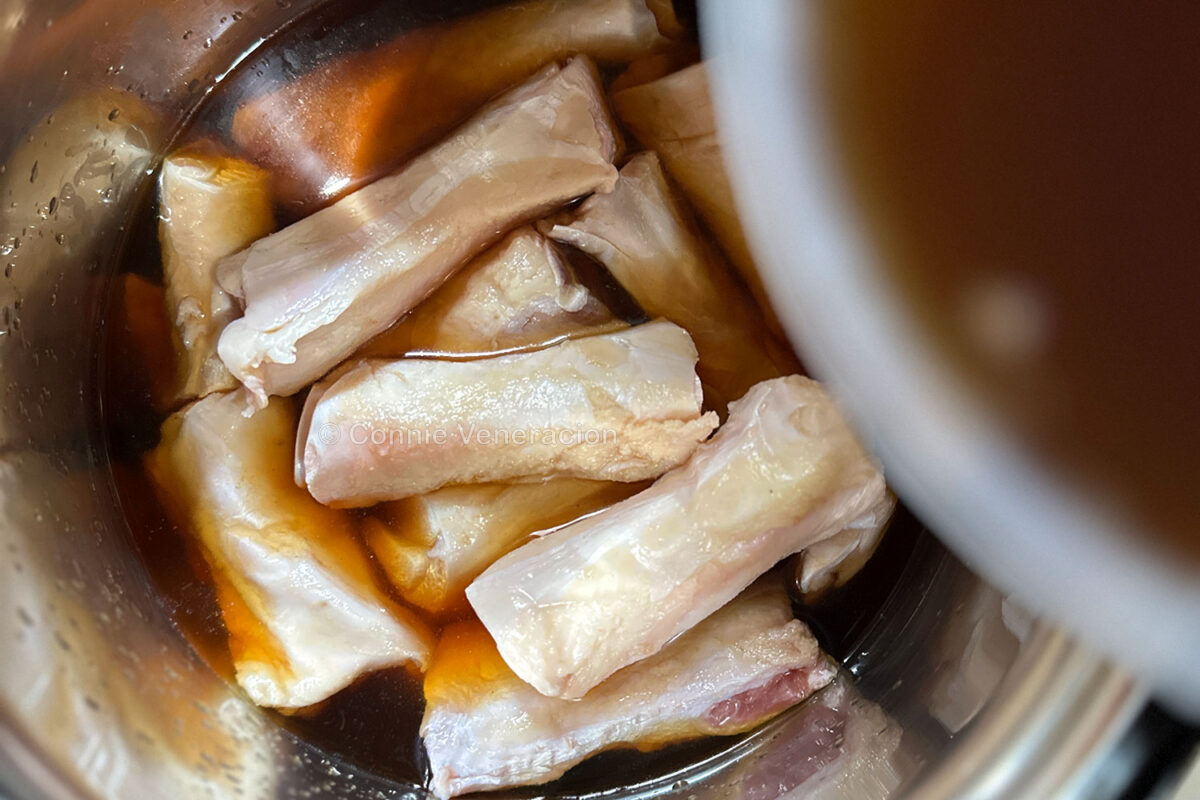
I set the slow cooker in HIGH until the broth is boiling gently then I switch to LOW and leave the tendons to cook for six to eight hours (or longer) depending on their size. Tendons from larger and older cows take longer to tenderize.
Storing cooked beef tendon
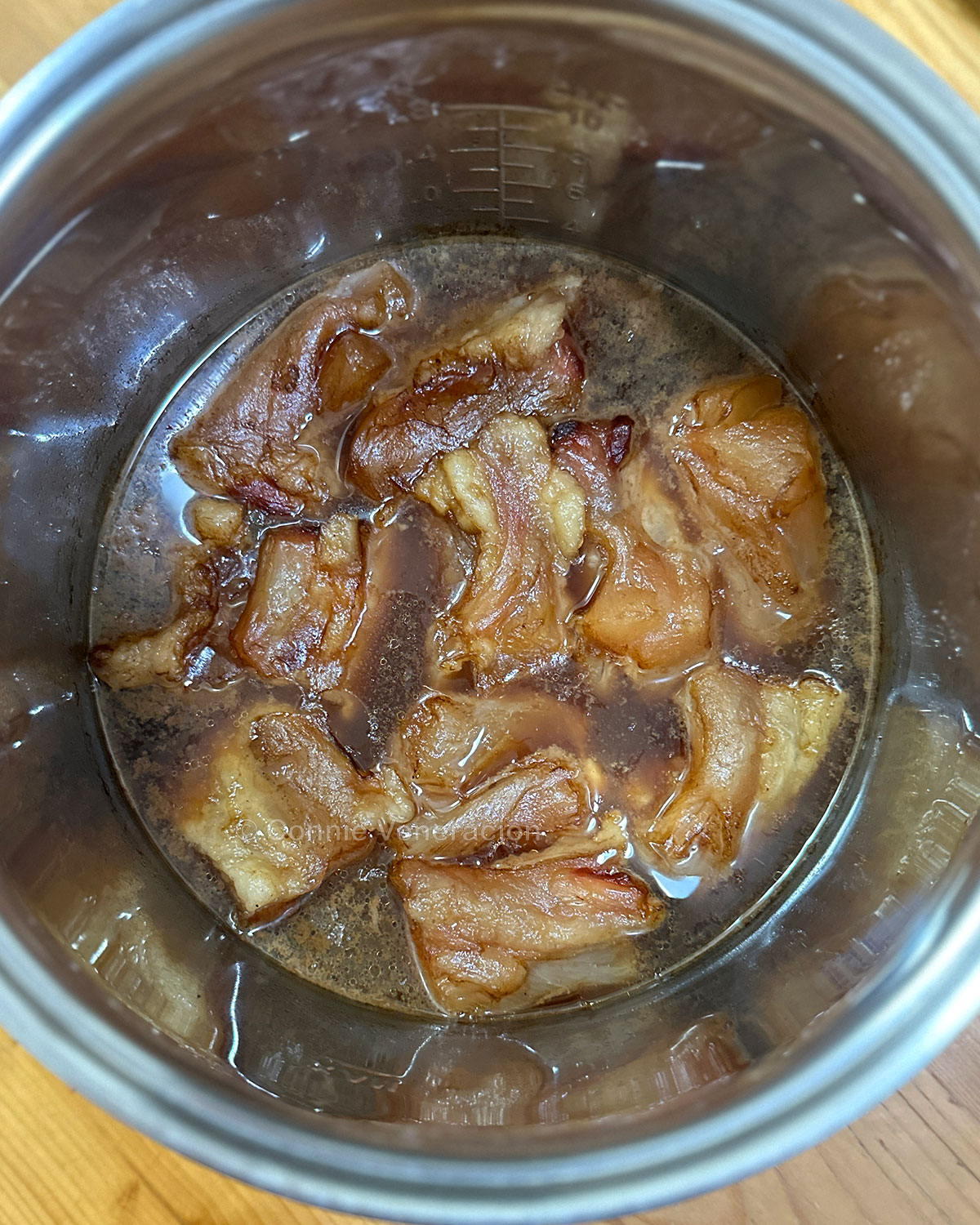
The extra long cooking time makes it impractical to cook tendon in small batches. I prefer cooking an entire kilogram and take what I need for a dish. The rest, I lift from the broth and transfer to a container with a tight lid which I keep in the fridge. Cooked tendon stays good for a couple of days.
How to enjoy beef tendon
Chilled beef tendon is easier to handle and cut into your preferred size and shape. Cut into slices, into cubes or even into strips. Just reheat in simmering broth until softened.
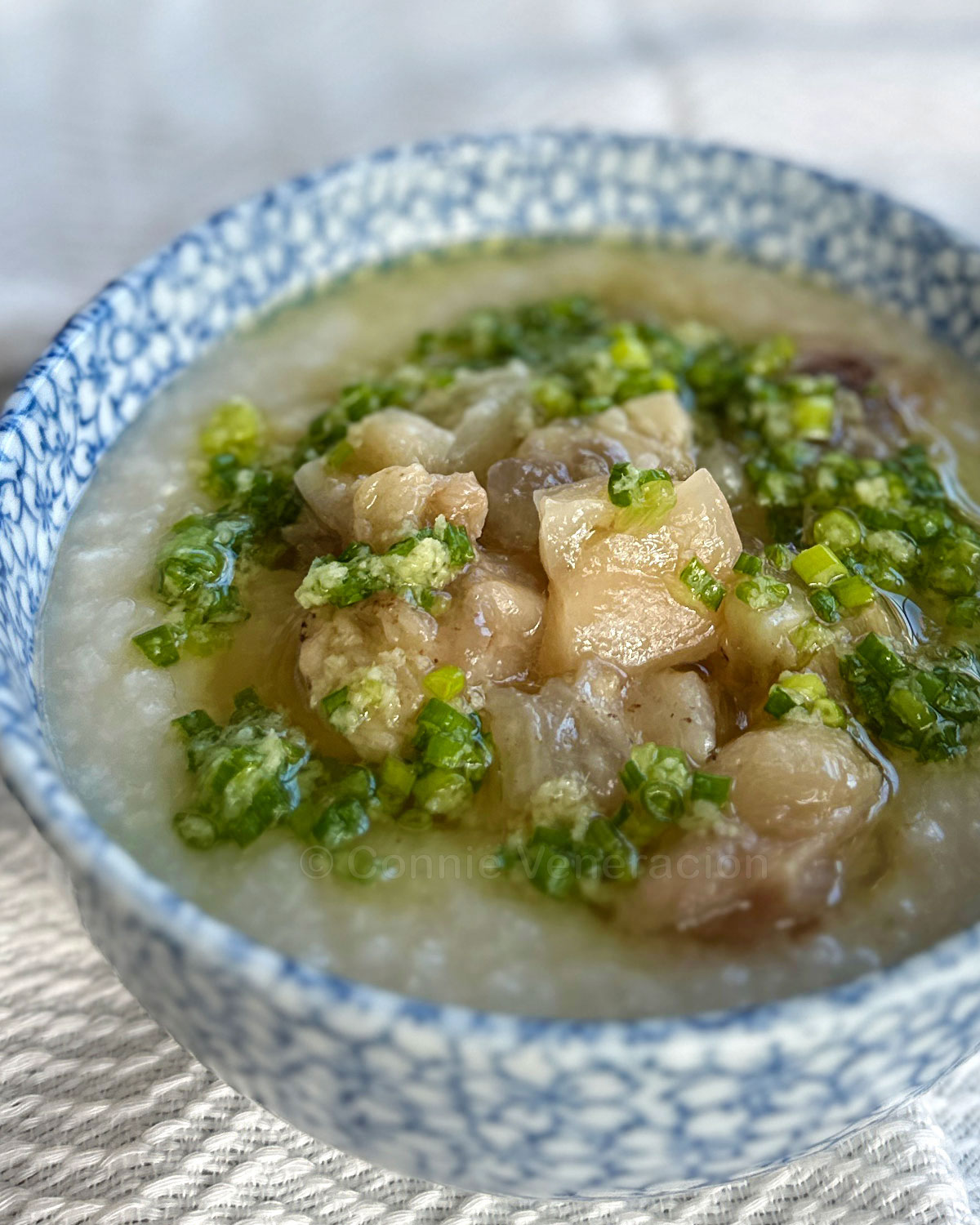
Try topping your congee with thick slices of beef tendon drizzled liberally with ginger scallion sauce (yes, the sauce that traditionally goes with Hainanese chicken).
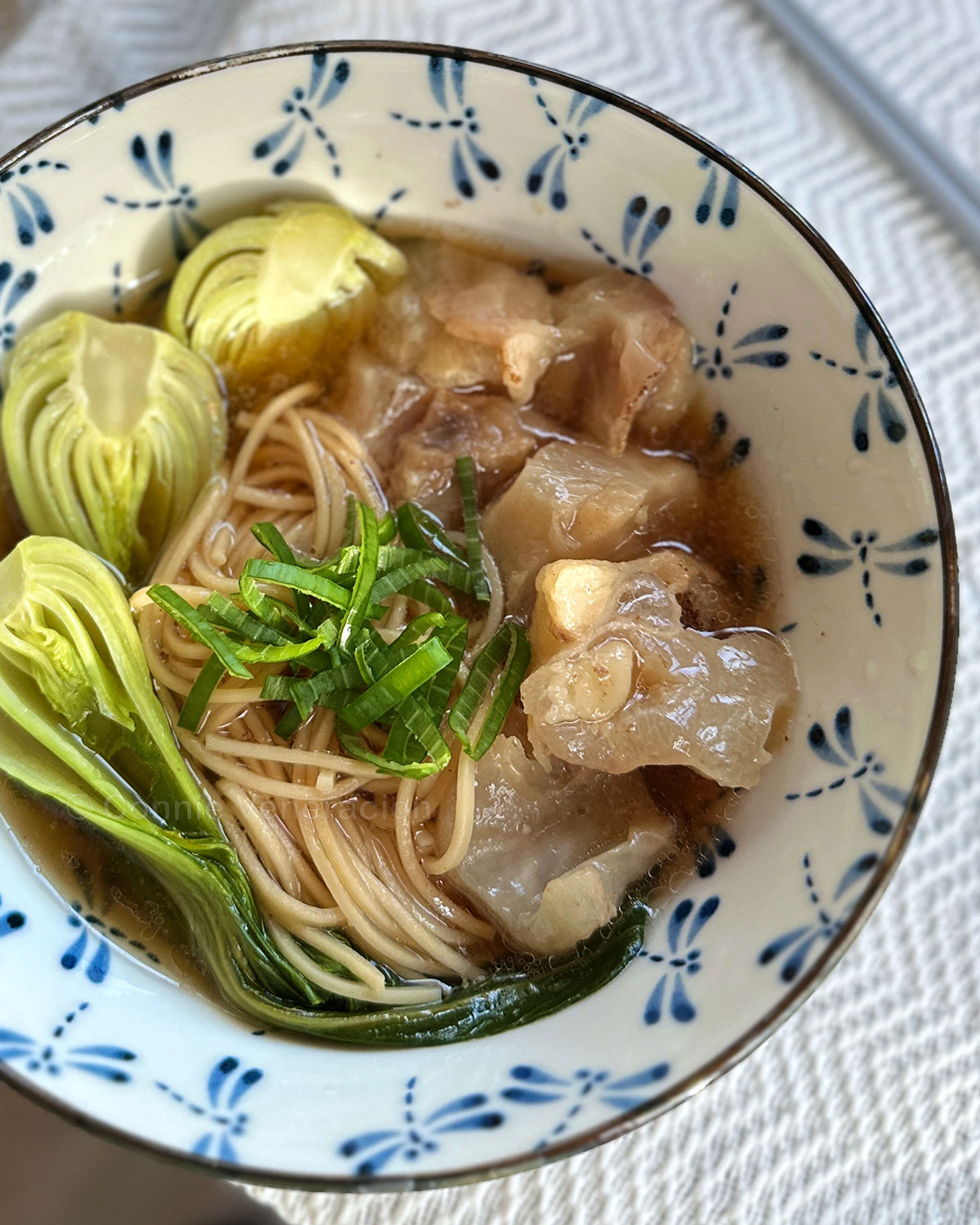
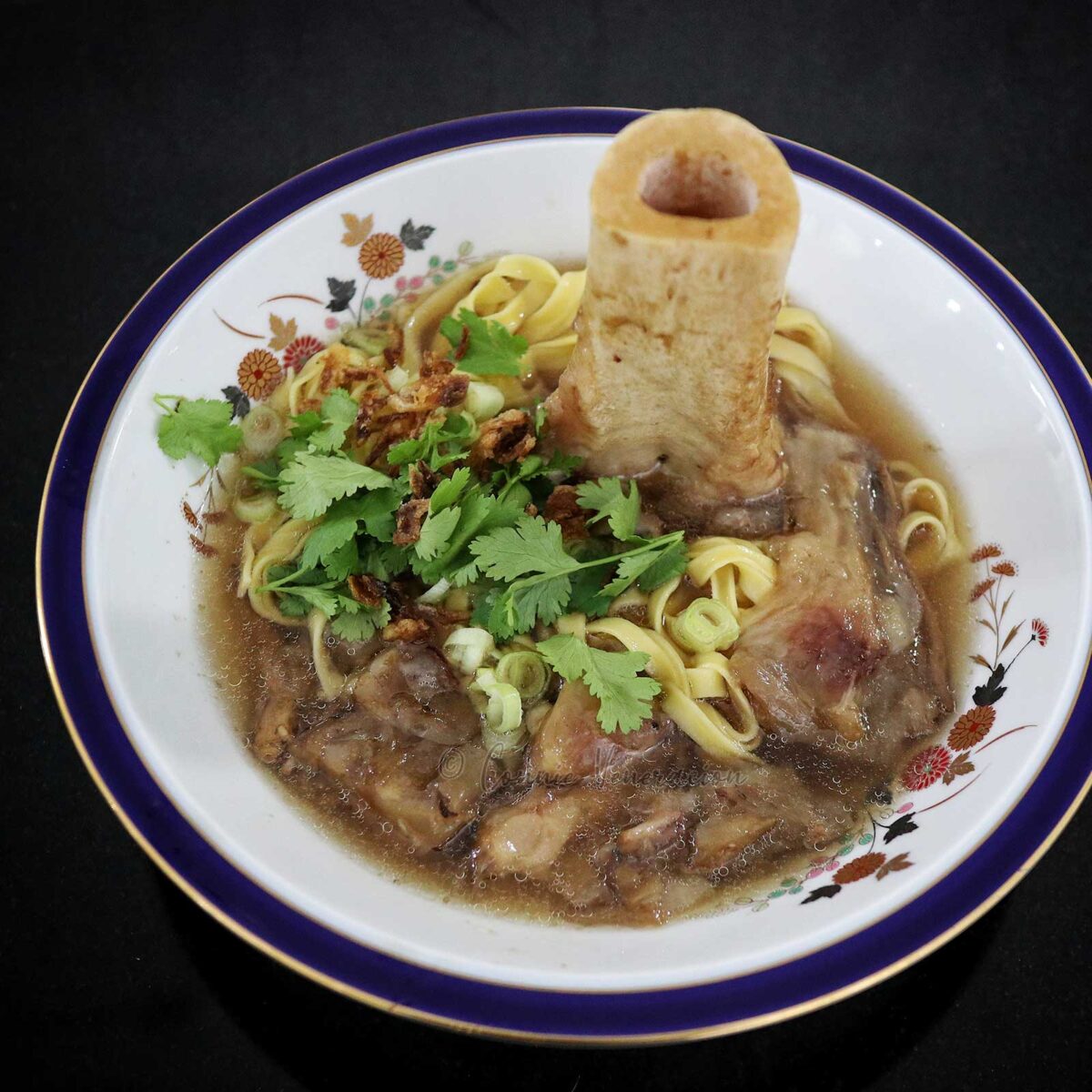
Or add beef tendon to a bowl of ramen.
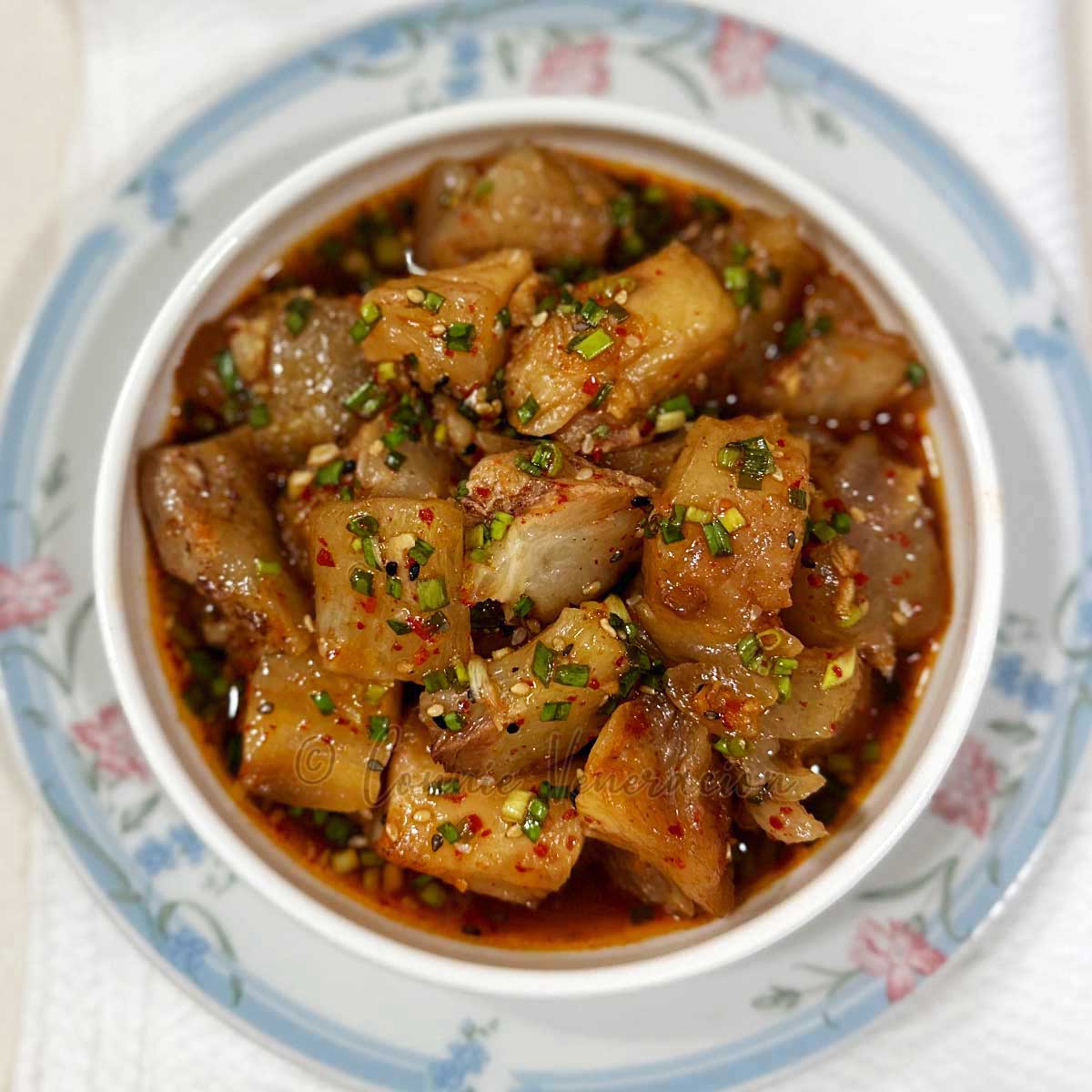
If you prefer to enjoy your beef tendon without carbs, see my recipe for beef tendon braised in soy chili sauce.