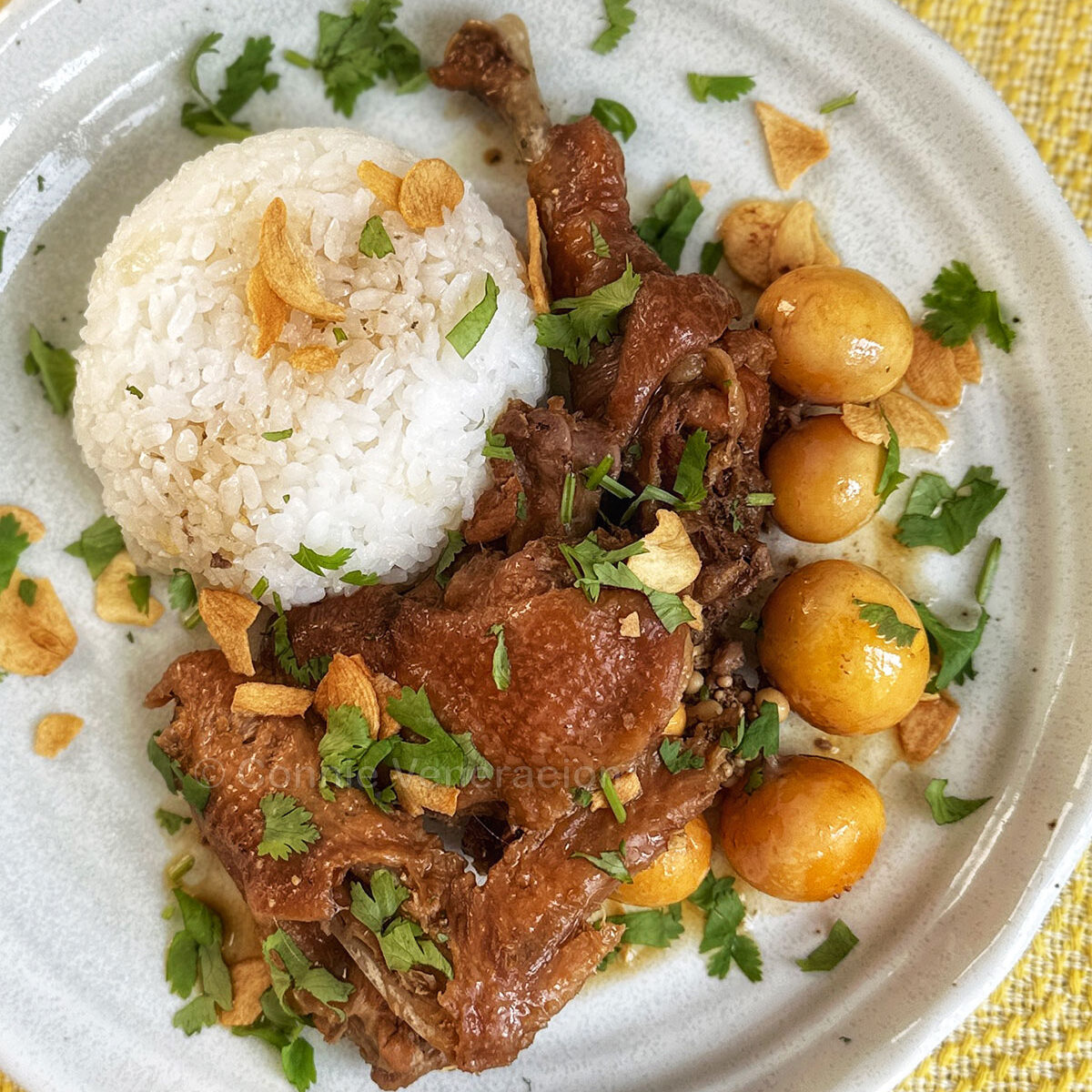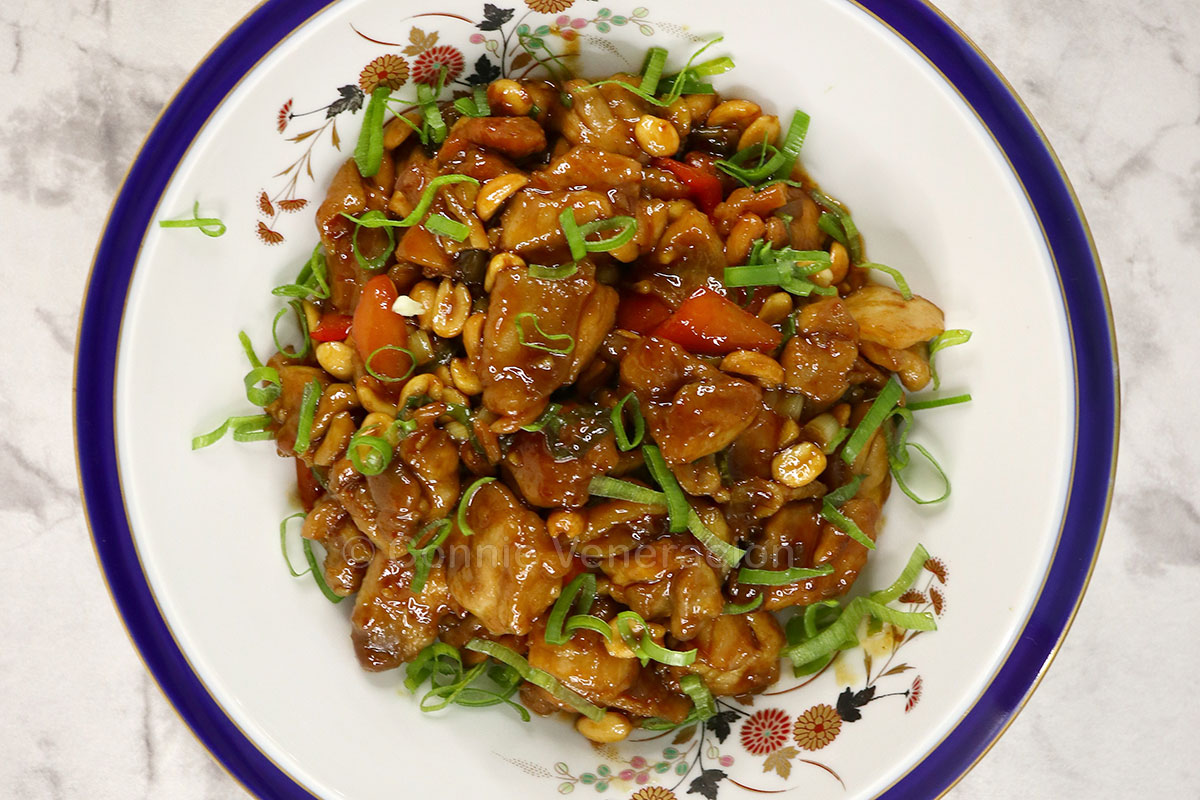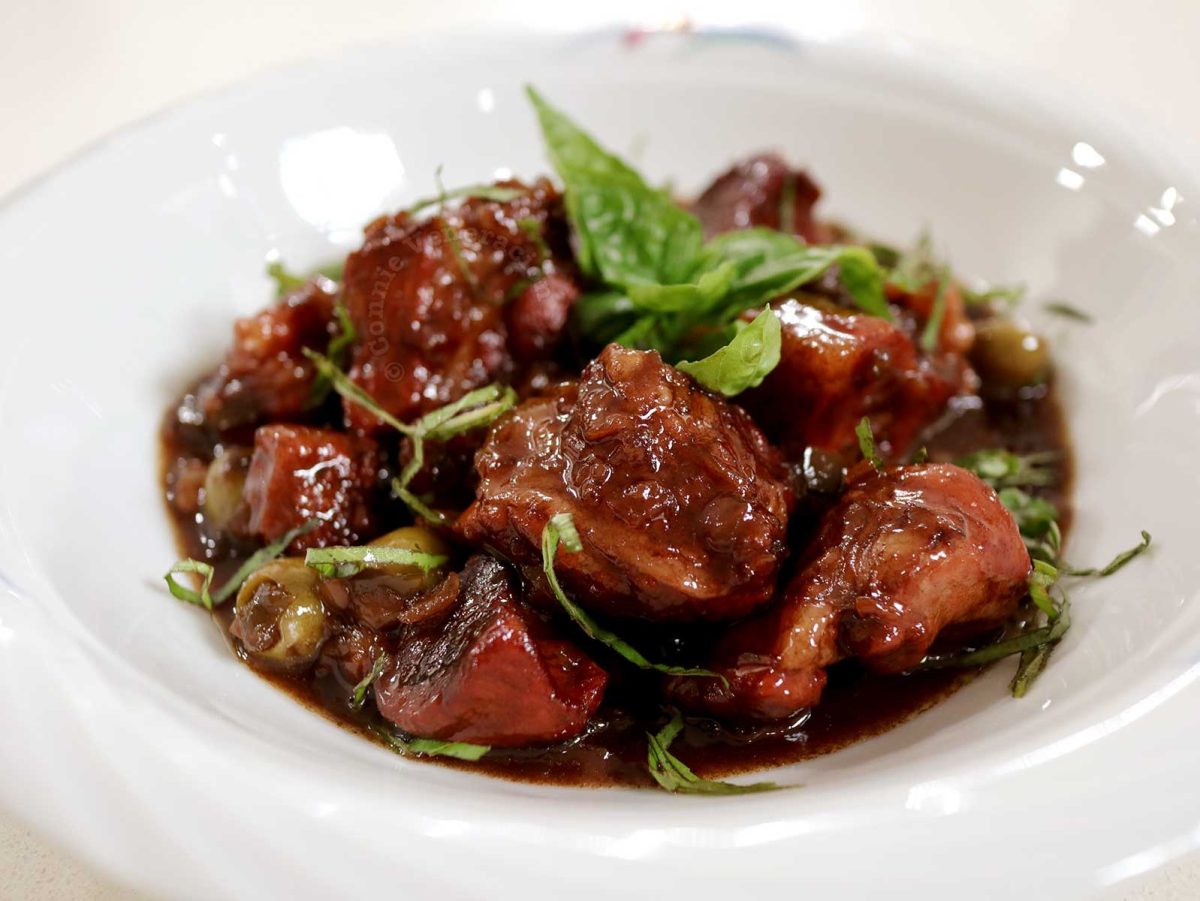
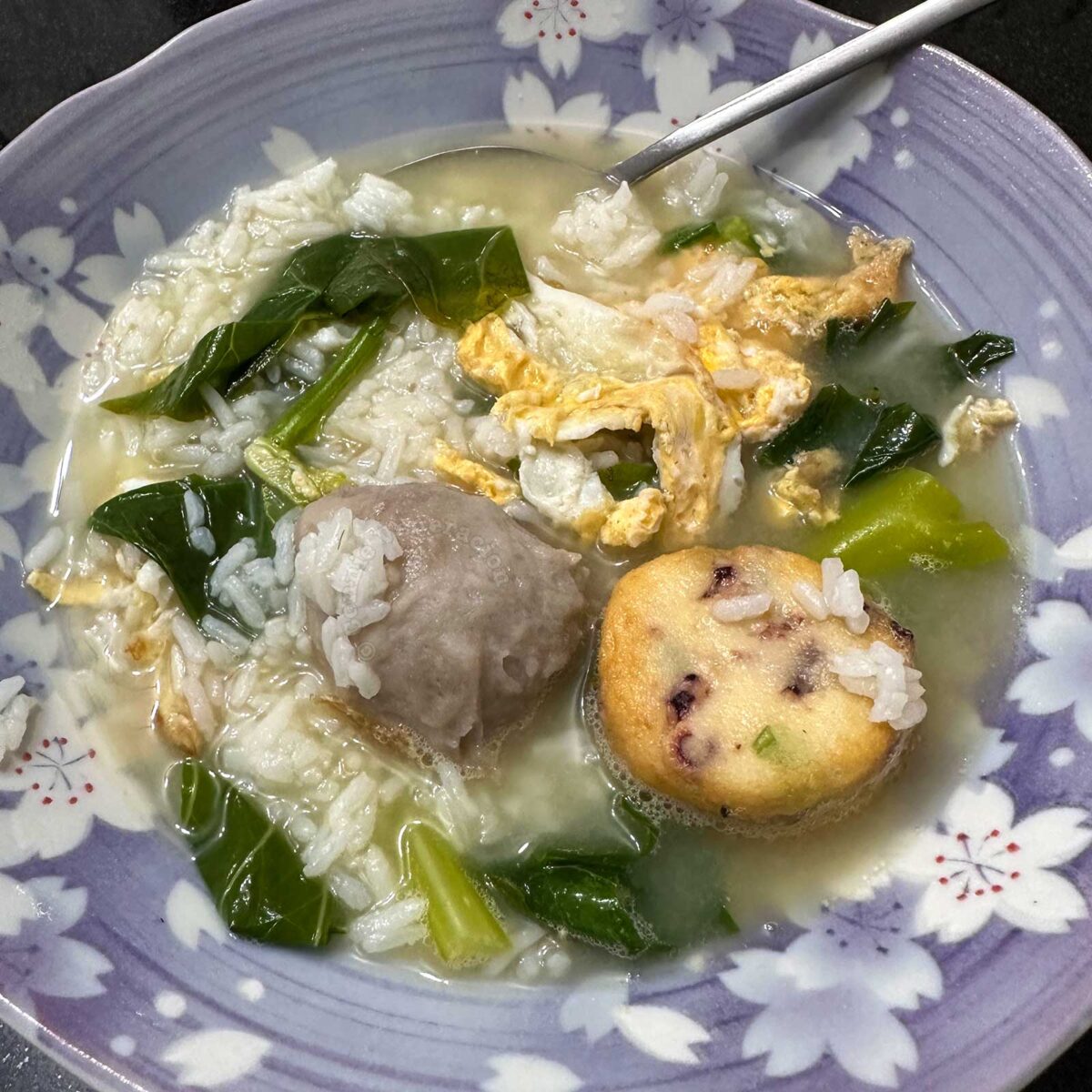
In Asia, many soup dishes are main courses meant to be served with rice. In the Philippines where we eat our meals from dinner plates, we place the meat and vegetables from the soup beside the rice on the plate, pour broth over the rice and combine protein, veggies and rice in every spoonful. Yes, spoonful. We use spoon to bring the food to our mouth. We’re rice eaters and you can’t pierce rice grains with a fork. It’s even more ridiculous to use a fork to scoop rice. So, yes, spoon.
We eat rice with a spoon
That’s how the Koreans eat soup with rice too — with a spoon but not from a plate. Instead, they drop mounds of rice rice into the bowl of soup, stir it in and use a spoon to scoop the contents of the bowl — solids and liquid — and bring them to their mouth. Smart, really. From a plate, it’s hard if not impossible to scoop off the plate whatever broth had not been soaked up by the rice. From a bowl, a spoon is all you need to enjoy the broth to the last drop.
That episode got me thinking about rice and how essential it is to the Asian diet. If you think eating soup with rice is wildly unfamiliar, see the menu of local franchises of American fast food chains like McDonald’s. Burger with rice, anyone?
My rice cooking journey
And yet, I didn’t even know how to cook rice until I was married. I could cook almost everything else — I could even bake a little — but rice? When I was growing up, somebody else always cooked rice for the day. In a gray metal pot with a heavy lid and a thin wire-like handle. Really old school. I remember that it was a pain the neck to scrub especially if the rice got burnt or a crust formed and the pot was not soaked in water while still warm.
Then I got married and we lived with my in-laws after the wedding. They had an electric rice cooker. But I never used it. I was working but, on weekends, I cooked. But somebody else still cooked the rice. When the rice cooker conked out (it looked really ancient and it was just begging to be succeeded by a newer model), rice was cooked in the kind of pot we had at my parents’ house.
On mid-morning one Sunday, I was cooking lunch when I noticed that no one cooked rice. I located the heavy pot, measured the rice, rinsed it, covered the grains with plenty of water, put on the lid and turned on the stove.
After a while, I noticed agitation on the lid. It looked like it would lift but it was heavy so it stayed put. Still agitated though. Then, after what seem to me now as a few minutes, without any warning that I could discern, it tilted as one side lifted. And from the pot’s rim onto its side flowed white goo. Sticky starchy goo. I grabbed a pot holder, lifted the lid and there was a pool of starchy goo that was boiling on top of the rice. Or, at least, that was how it looked to me.
My first thought was that the water was not integrating properly with the rice, and my intervention was necessary. I took a ladle and started stirring. Gently, at first, then furiously. Out of the corner of my eye, I saw my mother-in-law and father-in-law arrive from Sunday mass. My mother-in-law walked into the kitchen, saw me stirring the rice, and she really did look shocked. She took the ladle and set it aside, got rid of the excess liquid (apparently, I poured in too much water), lowered the heat and replaced the lid on the pot.
It was humiliating and hilarious at the same time. How could an Asian — a Filipino — cook so well but not know how to cook rice? So disrespectful to rice, right? Especially for someone who grew up adoring tikoy and suman, thinking that lunch and dinner without rice is not lunch and dinner at all but a mere snack, and that a meal at a Chinese restaurant is never complete without yang chow fried rice.
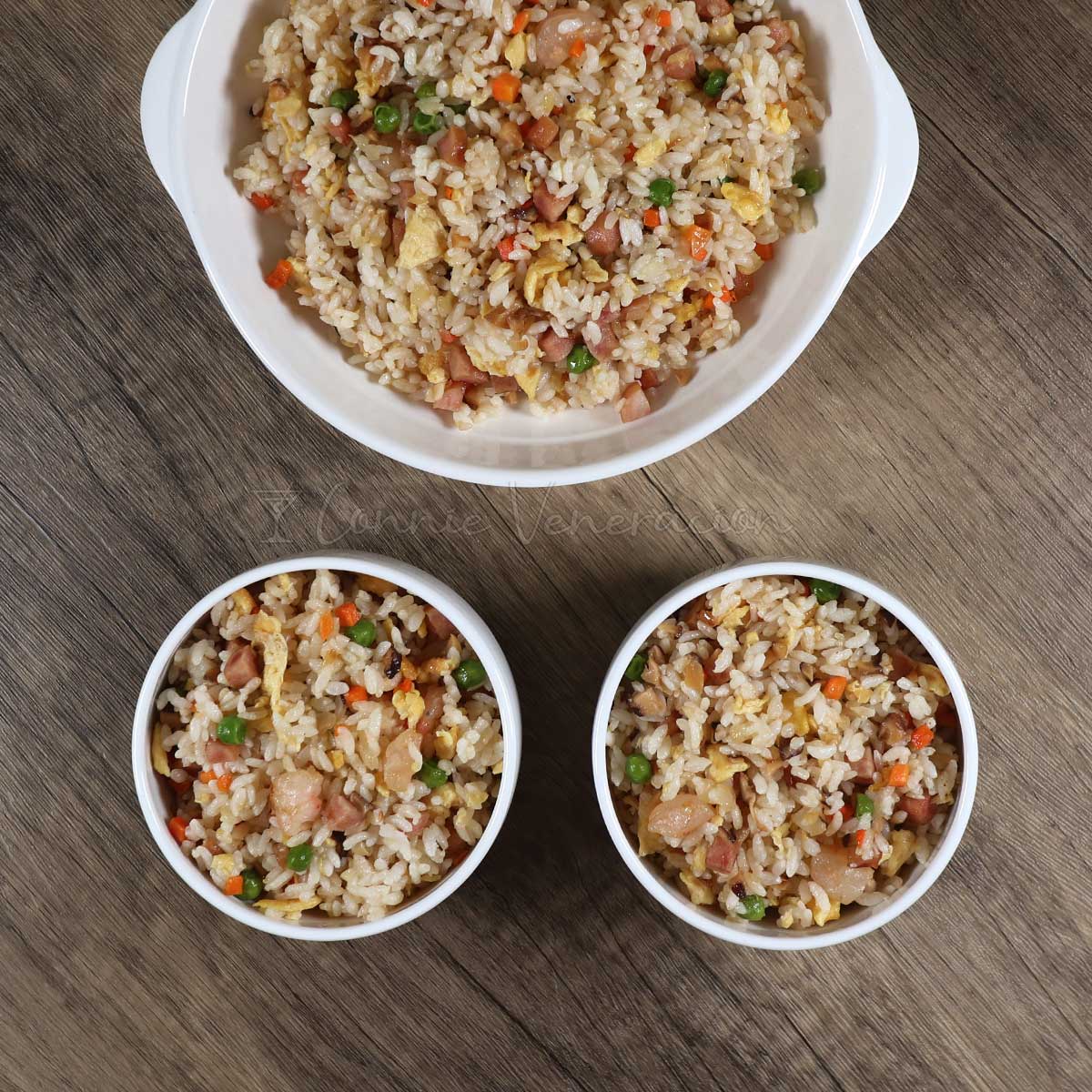
Looking back, it may because rice was an “aside” to me. It was the perfect partner for most Asian main courses but not quite the star. And what I was more interested in was learning to cook the star of every meal. It would take years for me to realize that rice can be the biggest star of any meal. But that’s another story.
In case you’re wondering, we did eat the rice from the pot. My mother-in-law was able to salvage it. I never used that pot again but someone bought a new rice cooker soon after that, and I learned to use it properly. By the time we had our own house and our own rice cooker, I cooked our everyday rice quite well. I also knew more about rice by then. For instance:
Stirring rice during cooking coaxes the grains to release starch into the liquid
- That is not a good thing when cooking rice by absorption (that’s how the rice cooker cooks the rice grains). In this cooking method, the goal is to cook the grains evenly but allow them to retain their shape and stay separate. That won’t happen if too much starch is released into the liquid. That starch coats the surface of the grains as the water is absorbed making the grains stick to one another.
- Stirring the rice during cooking is a good thing when making congee and risotto. These dishes require those tiny grains to release as much starch as they can into the cooking liquid.
How much water to add to the rice depends on the rice variety and age
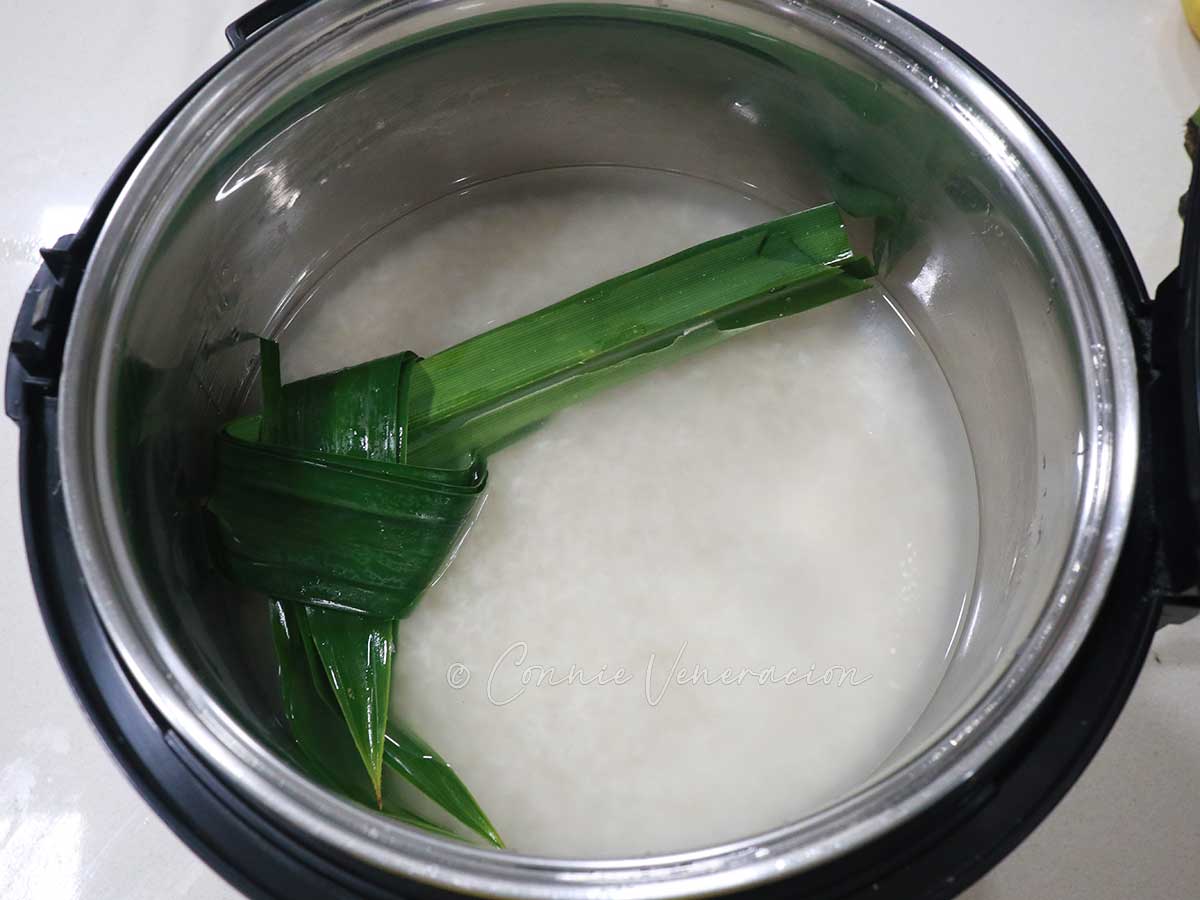
How much water you need to cook the rice depends on the amount of rice you’re cooking. Here is a list of things to remember.
- There is no universal ratio between rice and water.
- Newly harvested rice has more moisture in the grains and only a minimal amount of water is needed. One part rice with one part water is a good formula to begin with.
- The more aged the rice, the more water is required to cook the grains. One part rice with one-and-a-half parts of water is a good starting point.
- On a very general sense, short-grain rice requires less water than long-grain rice.
A rice cooker simplifies the task
I don’t remember being without an electric rice cooker since we moved to the suburb 23 years ago. Along with a wok, it’s become one of the most indispensable tools in my kitchen. Because it automatically does the job of heating the rice and water until the grains have absorbed all the liquid by simply pressing a button or two, I am left free to focus on cooking the main course.
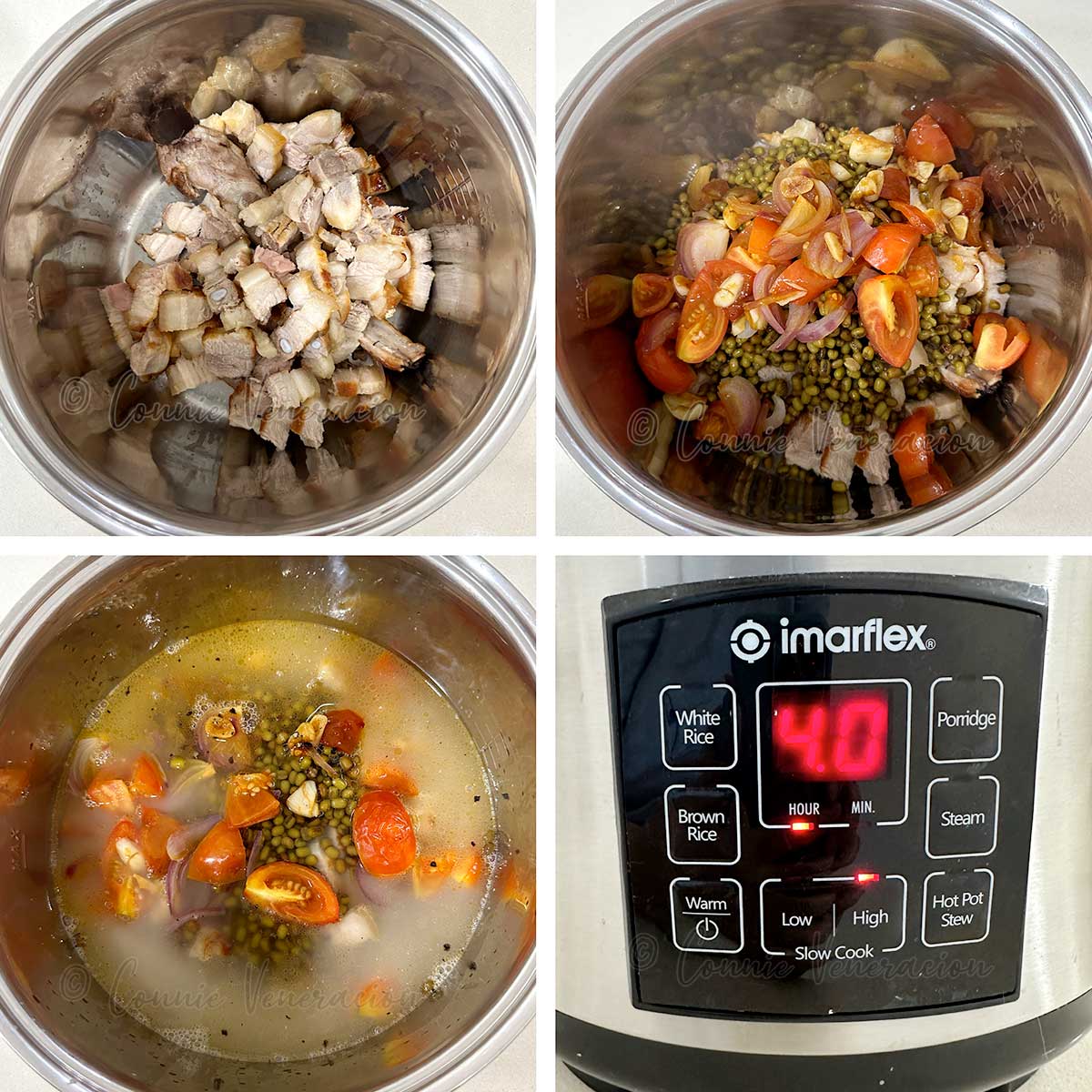
These days, rice cookers can do so much more. Some models are multi-cookers designed not only to cook rice but also cook soups and stews. With others, it is even possible to saute vegetables and brown meat in the cooker before adding the rice and cooking liquid.
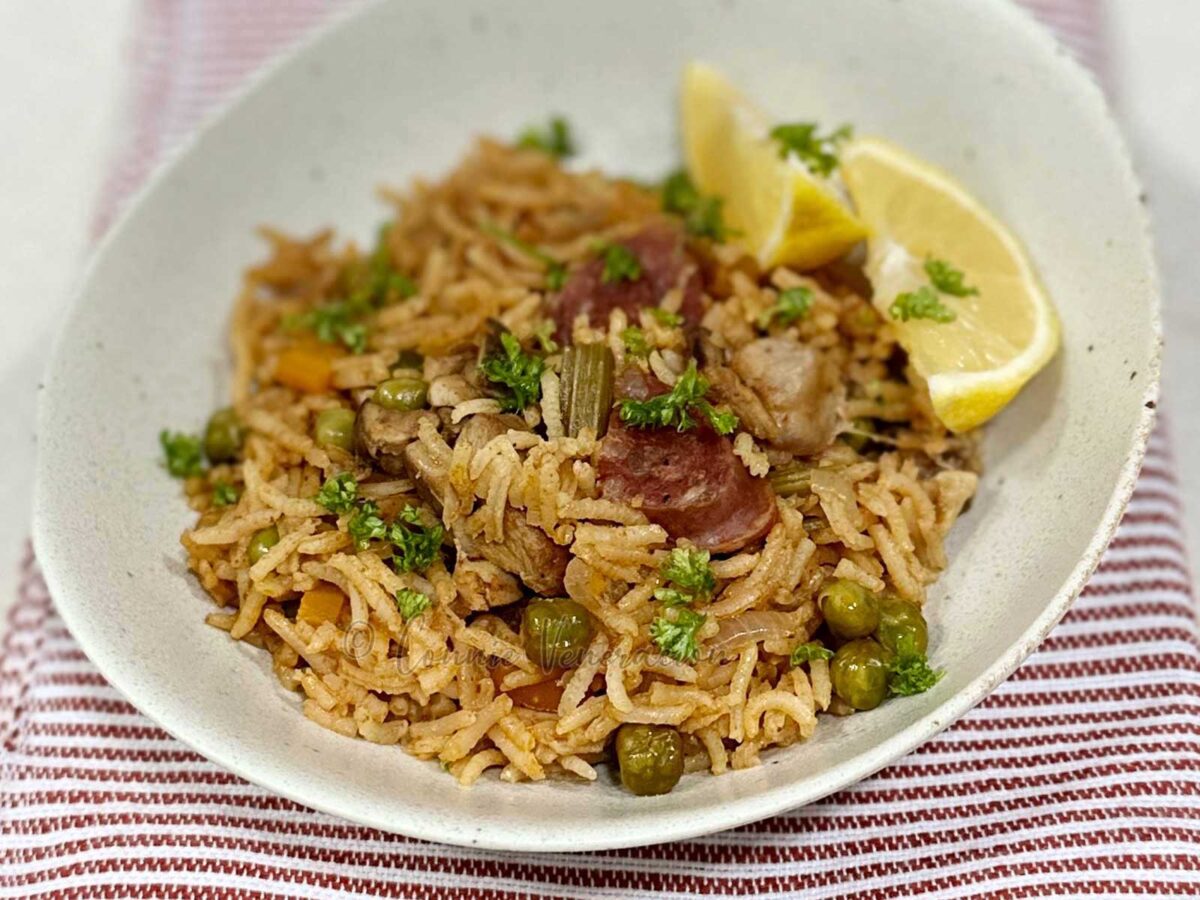

I’ve used a rice cooker to cook full meals. Two have been published. The rest, I will share soon. Meanwhile, enjoy these two. One is in the blog; the second was published in the newsletter and send directly to subscribers via e-mail. If you’d like to receive recipes and cooking tips that are exclusive to newsletter subscribers, you’ll find a sign-up form right after the post.