What is pho?
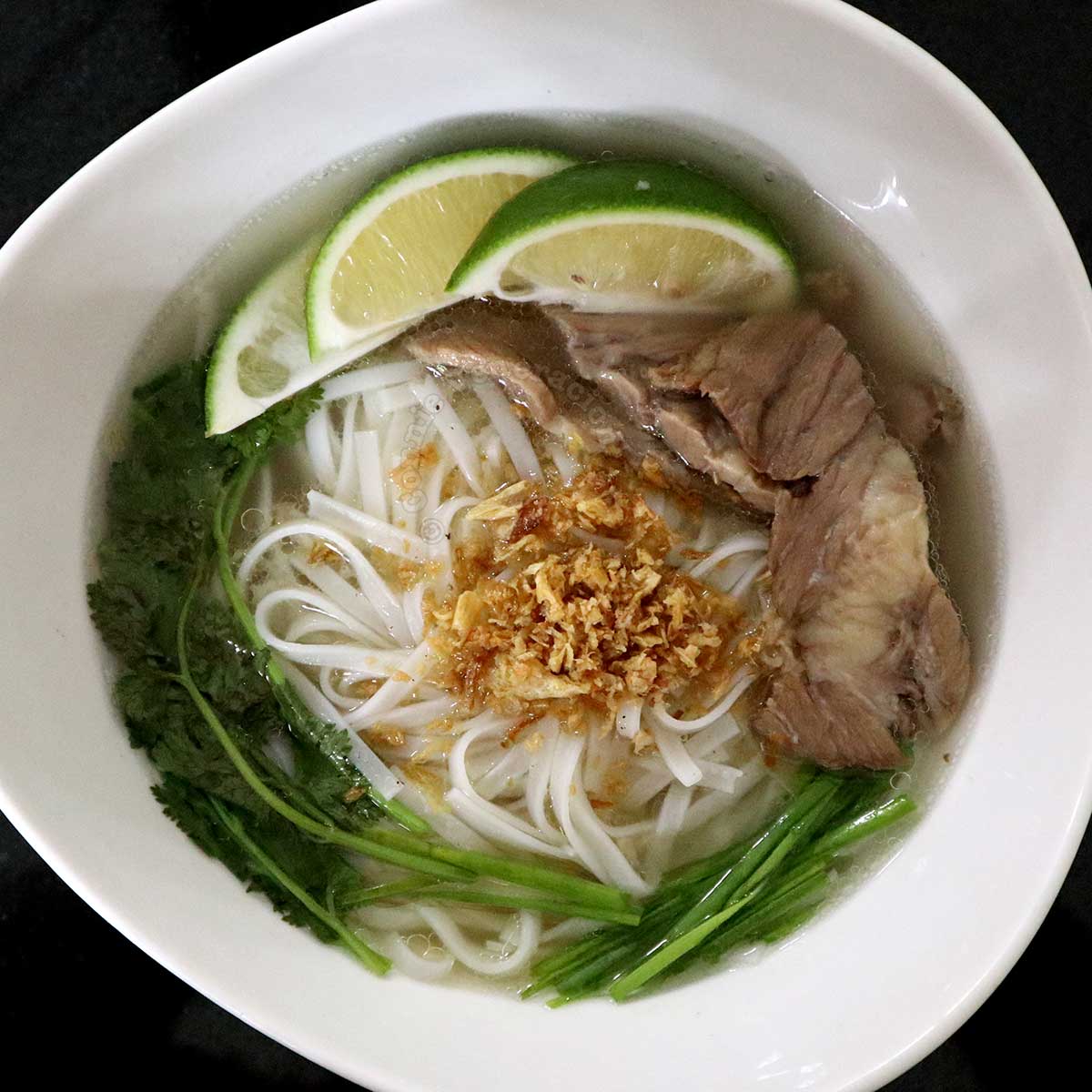
Pho is a Vietnamese soup with rice noodles, meat and vegetables. The meat if often beef but, occasionally, you’ll find chicken in your pho. The vegetables vary depending on the region in Vietnam where you get your pho.
Without noodles, it isn’t pho. So, there is no such thing as noodleless pho as some Westerners claim. It’s really just ignorance that gave birth to such a statement.
How is the meat served in beef pho?
Serving a bowl of beef pho with thin slices of raw meat that get barely cooked when the hot broth is poured in is not a strict rule. In fact, it is only one of many ways to enjoy beef pho. The beef doesn’t have to come in thin slices either. And the part of the animal where the meat is taken varies.
There is beef pho with regular meat and there is beef pho with organ meats. And it isn’t true that pho is good everywhere in Vietnam. There’s good pho, there’s mediocre pho and, finally, there’s superb pho that you’re unlikely to forget for the rest of your life. Something I learned after visiting Saigon (I know it’s Ho Chi Minh City now but I still often refer to the city by its old name) and Hanoi, and enjoying all the beef pho that I could comfortably digest.
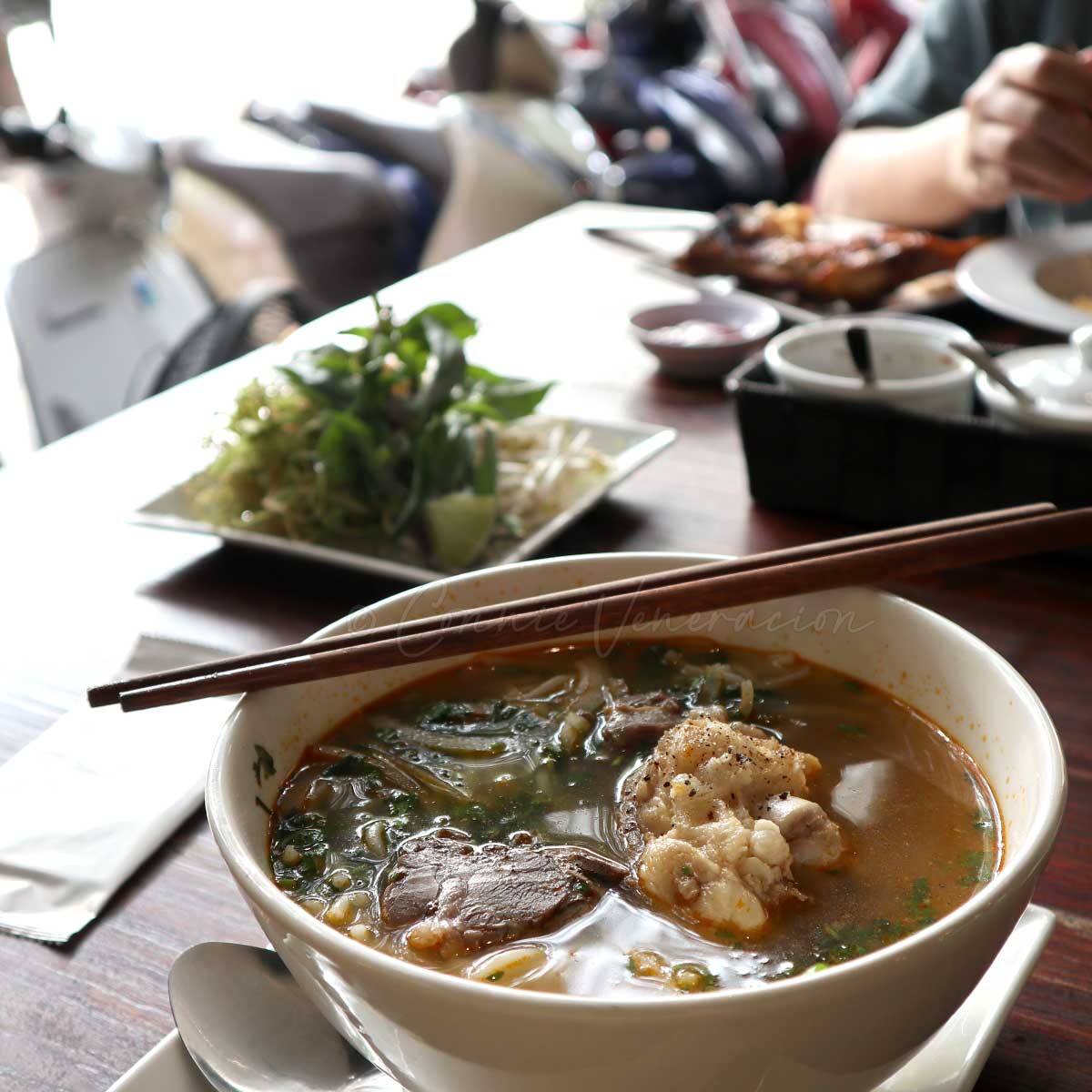
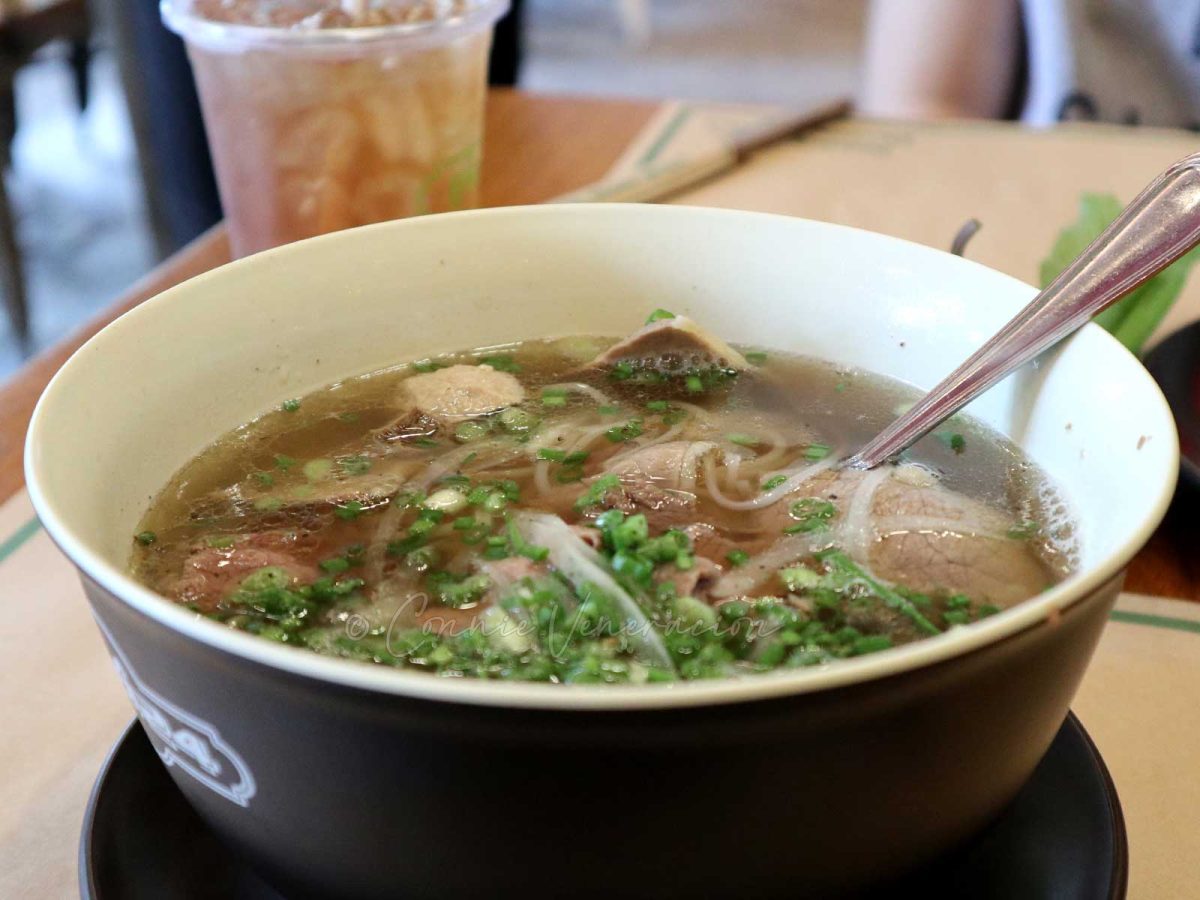
The best beef pho I had in Vietnam was in Hanoi
I had it for breakfast at a small hotel we spent a night in before moving to an Airbnb apartment in a more convenient part of the city. My daughter, Sam, who sat facing the hotel entrance, observed that the beef pho came from outside — probably supplied by one of the street food vendors or market sellers.
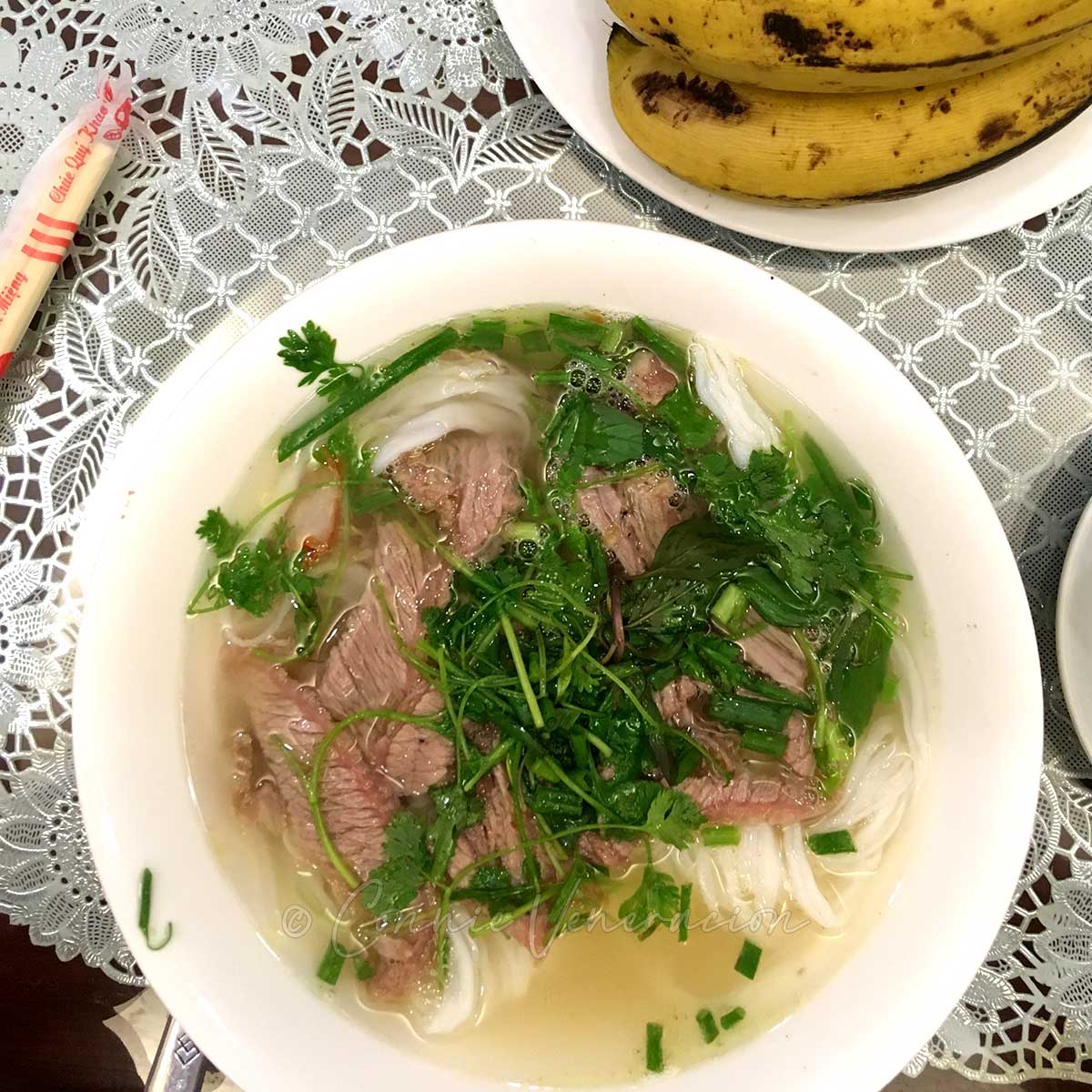
There was a lightness and freshness that’s hard to put into words. It didn’t come with the side plate of herbs and mung bean sprouts but it didn’t matter because they would have been superfluous. The noodles, the meat, the vegetables and that incomparable broth were all that I needed and wanted on a rainy morning.
Homecooked beef pho: the secret is in the broth
You have to have good broth. That really is what separates good pho from mediocre pho. Gather the correct ingredients and prepare to feel the pangs of hunger as you smell the delightful aroma of simmering broth that you shouldn’t touch until after the liquid has reduced and squeezed out all the flavors from the soup bones and spices.
Meat bones
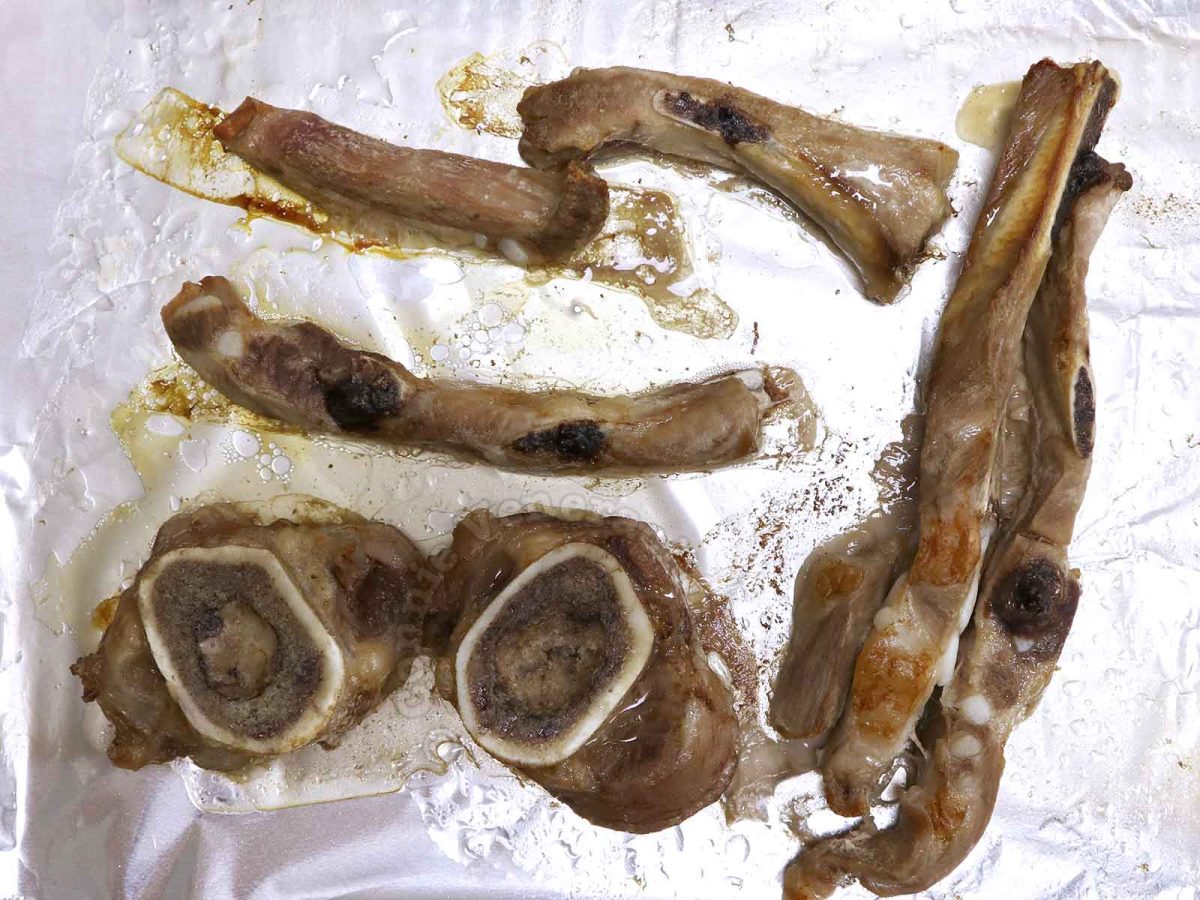
The most common combination is beef shank and tail. The marrow in the shank and the tendons in both cuts will assure you of a tasty broth.
If, however, you’re fortunate enough to find beef shank that already contains all the tendon that you want, you can skip the tail and combine the shank with some other bone. Like ribs.
Most recipes for beef pho you’ll find on the web instruct you to parboil the bones to remove impurities. I prefer to roast them in the oven. The caramelization of the natural sugars add a depth of flavor that defies description.
The spices
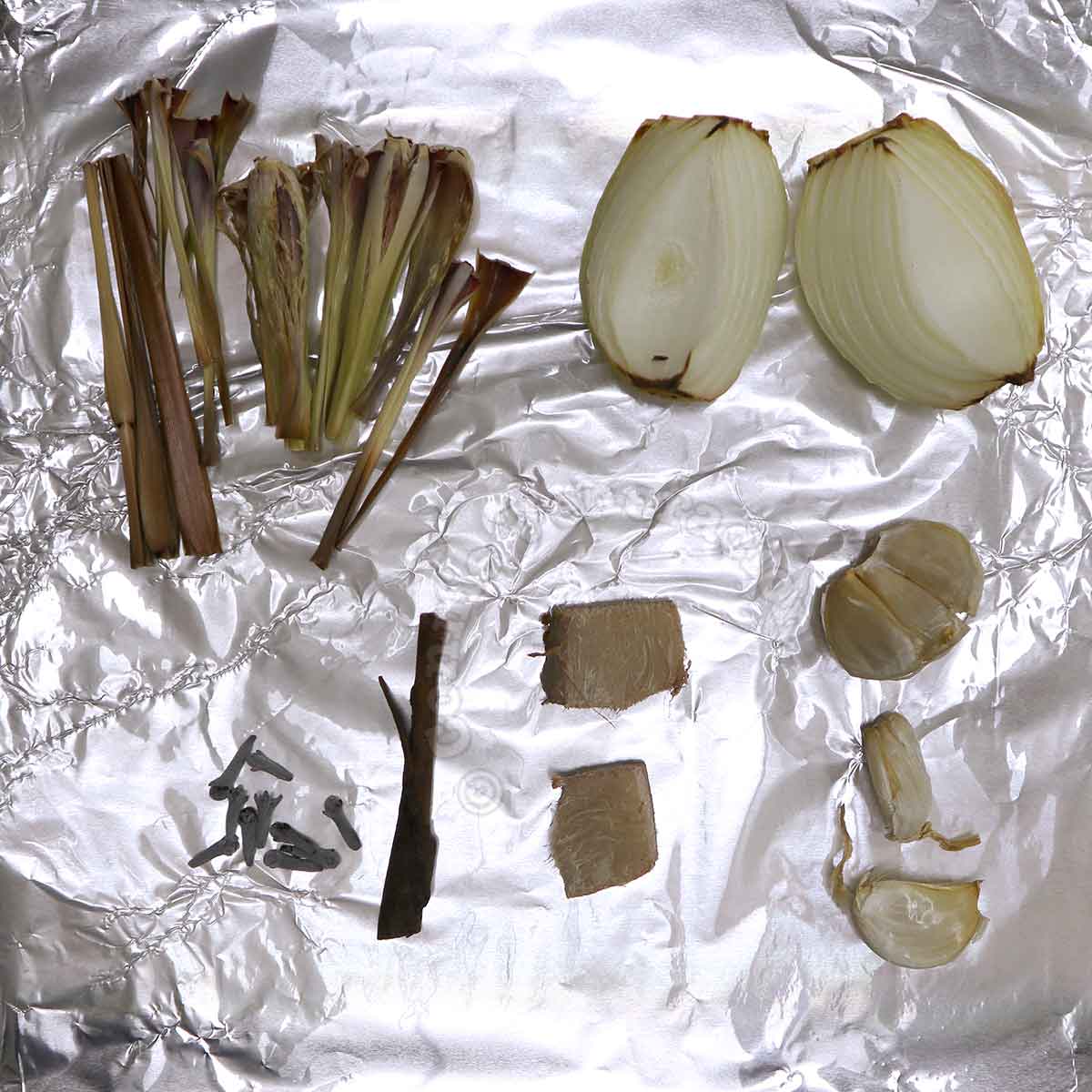
The most common combination of spices calls for onion, garlic, ginger, star anise, cinnamon bark, coriander seeds and cloves. I like to add lemongrass. And I roast all of them in the oven too.
The coriander seeds and star anise I had to toast in an oil-free pan on the stove top because they brown much faster than the other spices.
Making beef pho broth
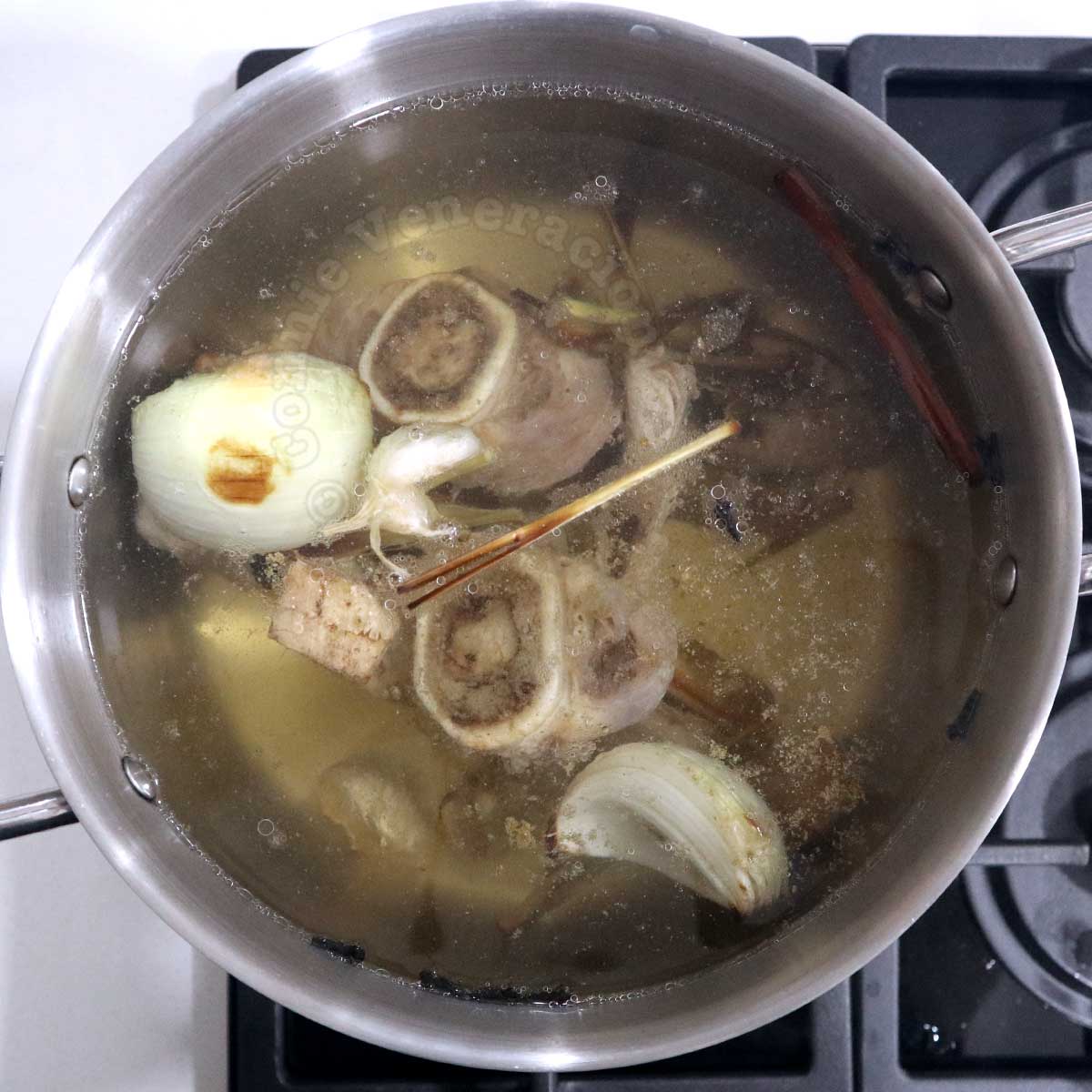
Once you’ve prepared your soup bones and spices, they all go into a pot.
For about 800 grams of soup bones and the spices you see in the photo above, I start with four liters of water and a quarter cup of fish sauce. Fish sauce. NOT soy sauce. I let everything boil for about 10 minutes before reducing the heat and covering the pan. Then, I let everything simmer until the liquid is reduced by half.
Yes, I let the liquid reduce by half. It takes about three hours. And, every hour, I taste the broth and add as much fish sauce as needed.
Once you have your lovely broth, making beef pho is a matter of assembly. See my Hanoi-style beef pho recipe.