I haven’t used dill seeds in the kitchen. But dill leaves, yes. I love the citrusy aroma with a hint of grassiness. We use the leaves cooked or raw.
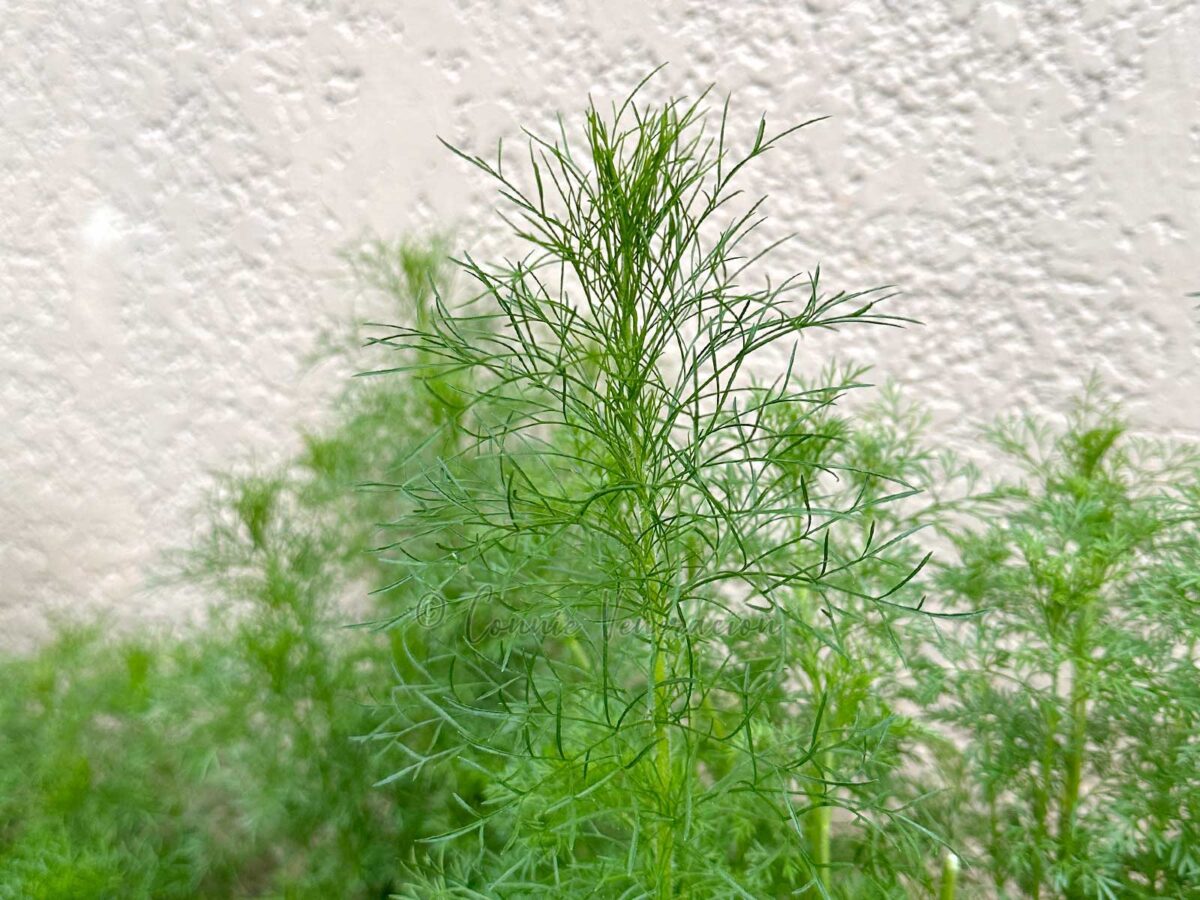
We grow dill in the garden. If basil was the first herb we ever grew, dill was the second. Back in our old house, our cats nibbled on the dill leaves for reasons I could not understand. We have moved to a different house, we don’t have cats anymore, we have two dogs instead, but we still grow dill.
Admittedly, dill is not one of the most used herbs in our garden. Mint and basil are. And what should explain why we have so much dill. We planted in one spot but the wind must have scattered its seeds, and dill now grows in four different spots.
Did we grow our dill from seeds?
No, we’ve never tried that. In the old house, the dill was replanted directly from a pot bought from a plant shop. Our current crop came from rooted stalks given by a neighbor. When I said that some of the dill plants we have might have grown from seeds, well, that’s just a guess because there is no other obvious explanation for the ones that sprouted in different areas of the garden.
Intentionally planting dill seeds to grow the herb is not something we’ve considered. Truth we told, we’ve never been much good at growing anything from seeds. Whenever we tried, the seeds would sprout into seedlings but the plants never matured sufficiently to be harvested.
If you want to grow dill but you have neither seeds nor rooted seedlings, there is still another option if you know someone who is already successfully growing dill.
Drop dill cuttings in water to grow roots
Just like basil, you can take a mature stalk of dill, drop it in a jar of water, place the jar where it gets enough sunlight and wait until roots grow in the cut portion. When the roots are about an inch long, replant directly in well-draining soil in a part of the garden that gets plenty of sunlight.
Harvesting dill
Dill likes heat and lots of sunshine. If it gets what it needs, the plant will grow and thrive with very little tending. It’ll take a few months though before it can be used in the kitchen.
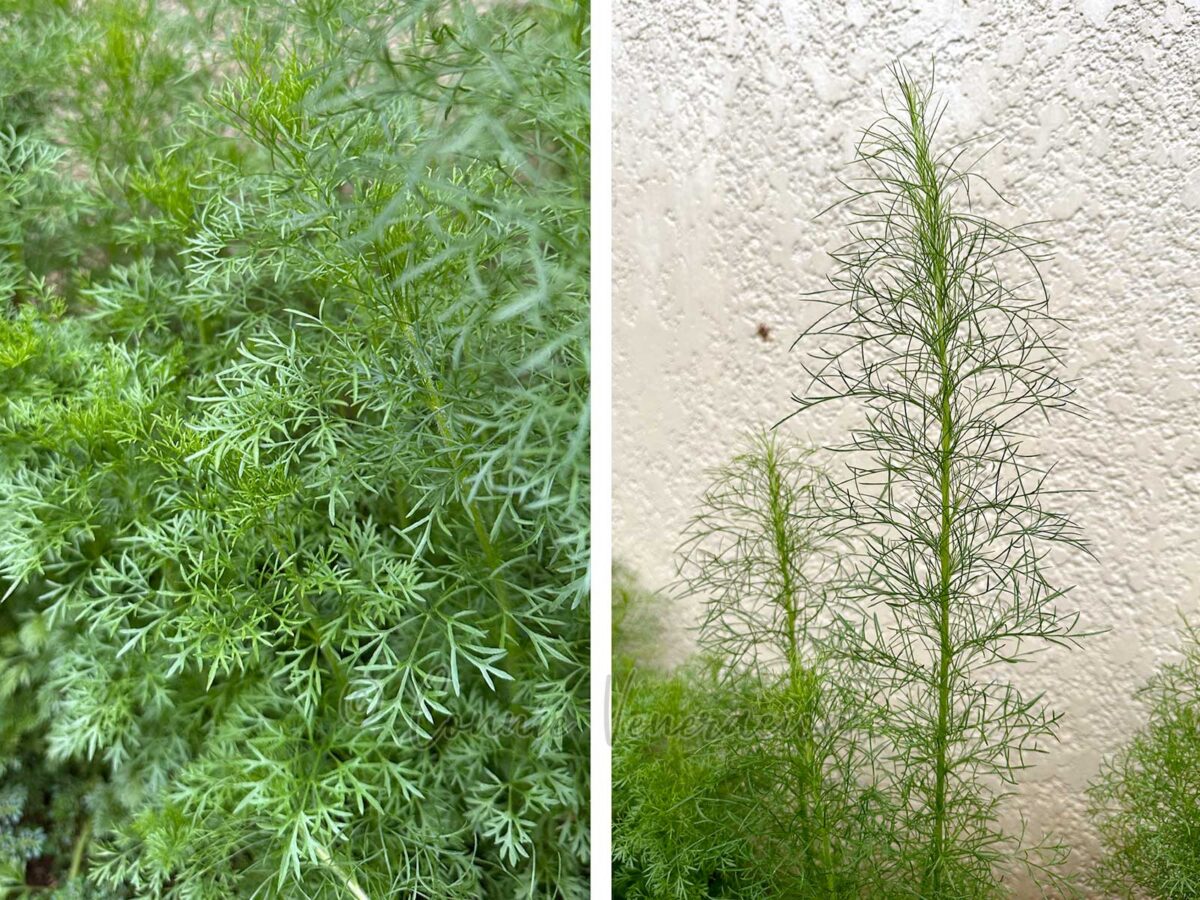
While dill is young and the stalks are short, the fine leaves are short too. As the plant matures and the stalks grow taller, the leaves grow longer at the same time. The left photo above shows the leaves of dill stalks about an foot and a half tall. The right photo shows stalks over four feet tall. See the difference in the length of the leaves.
You don’t really have to wait until the dill is four feet tall before cutting off a stalk or two to use for cooking. But don’t cut off stalks while the plant is still small. I honestly don’t know what the “safe” height should be, but I wait until the dill is at least three feet tall before I start harvesting.
Cooking with dill
There are two ways to use the stalks of dill I cut from the plants in the garden. The first way is to simply drop the stalk to flavor roast, soup or stew. Generally, the dill is discarded when used this way. The herb is already devoid of flavor which had been transferred to whatever food it is meant to add flavor to.
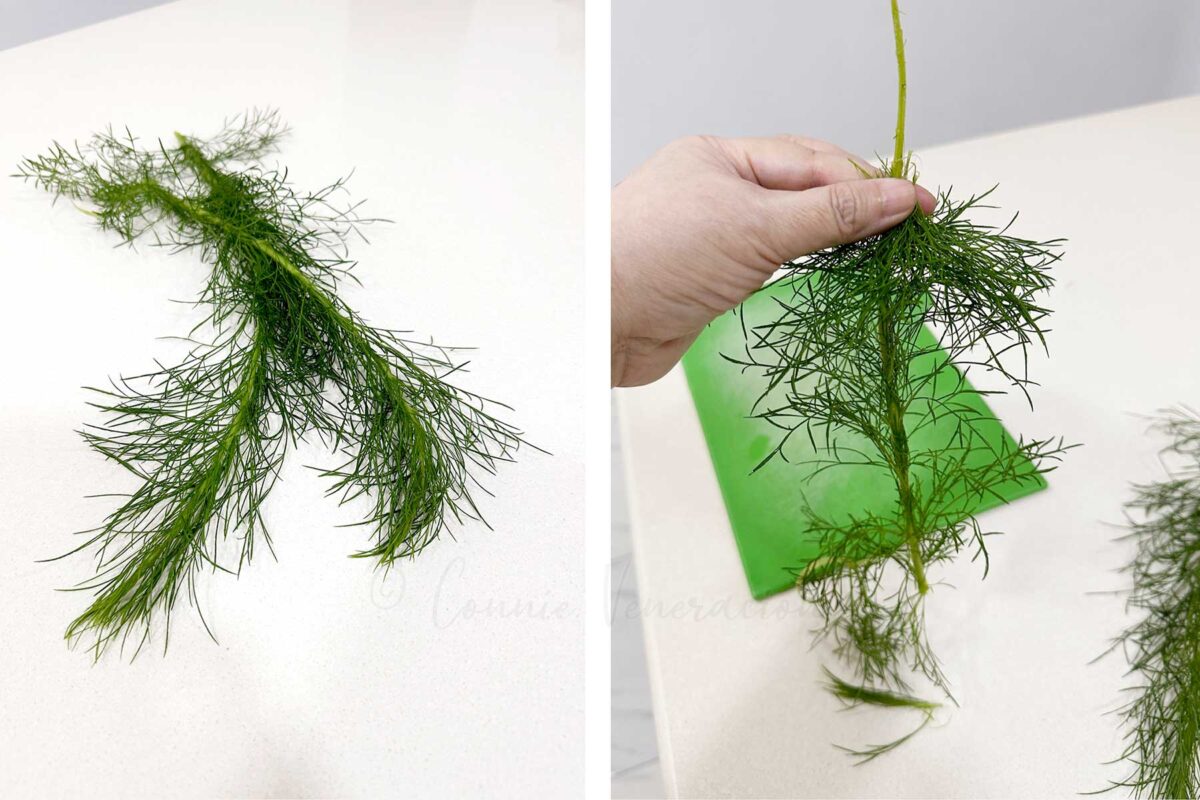
The second way is to use the leaves raw. To strip off the leaves, hold the top tip of the stalk with the fingers of one hand. Press the stalk between the forefinger and thumb of the other hand, slide down your fingers and the leaves will easily separate from the stalk.
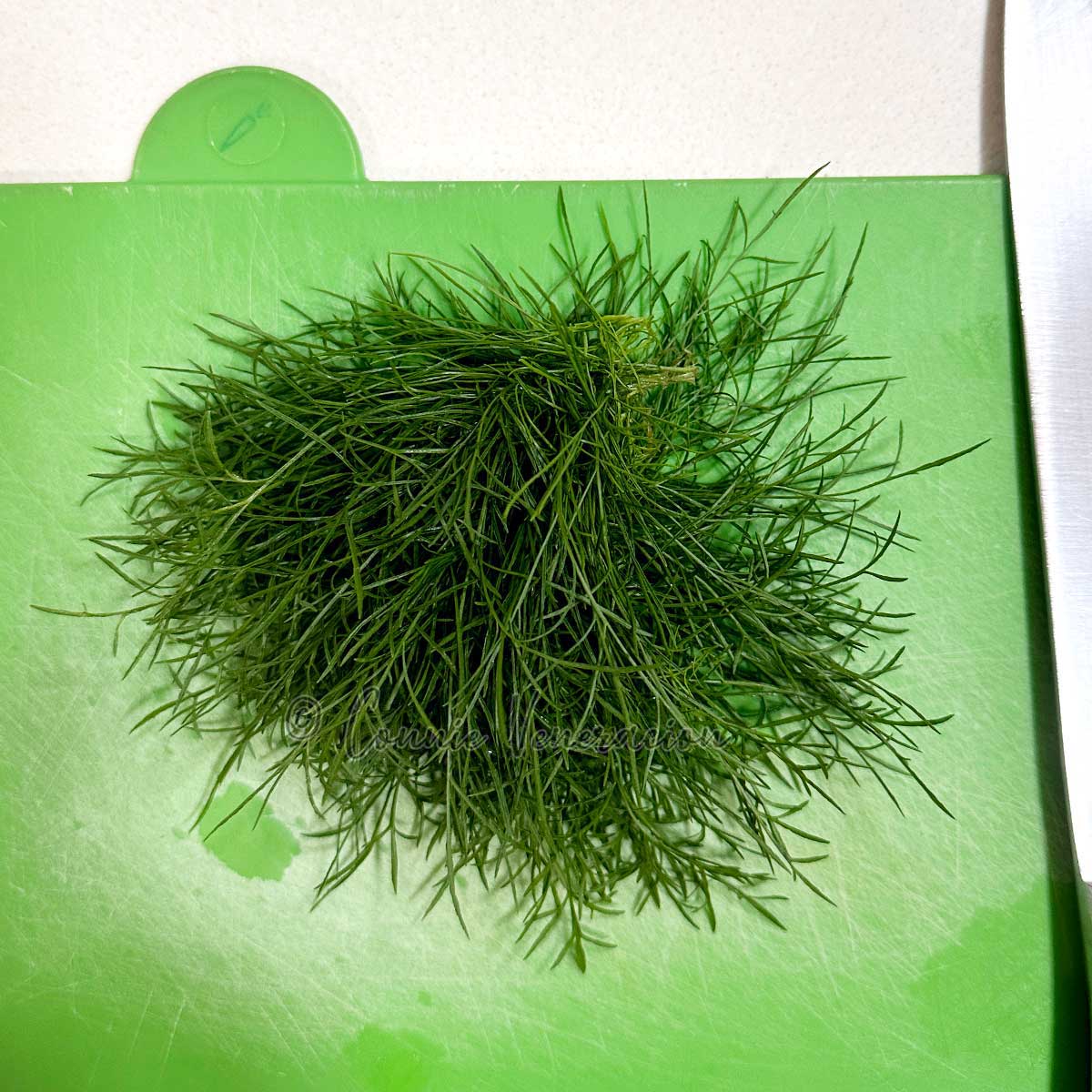
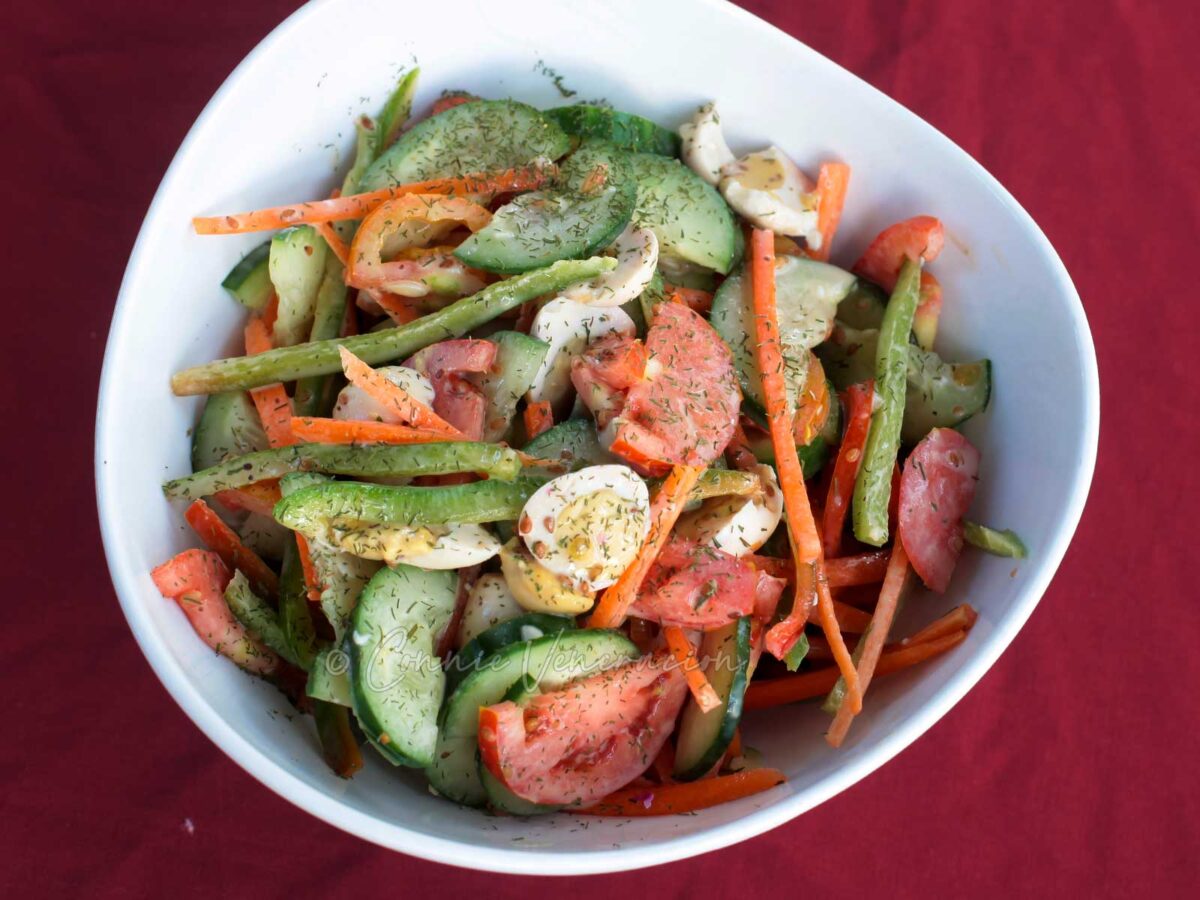
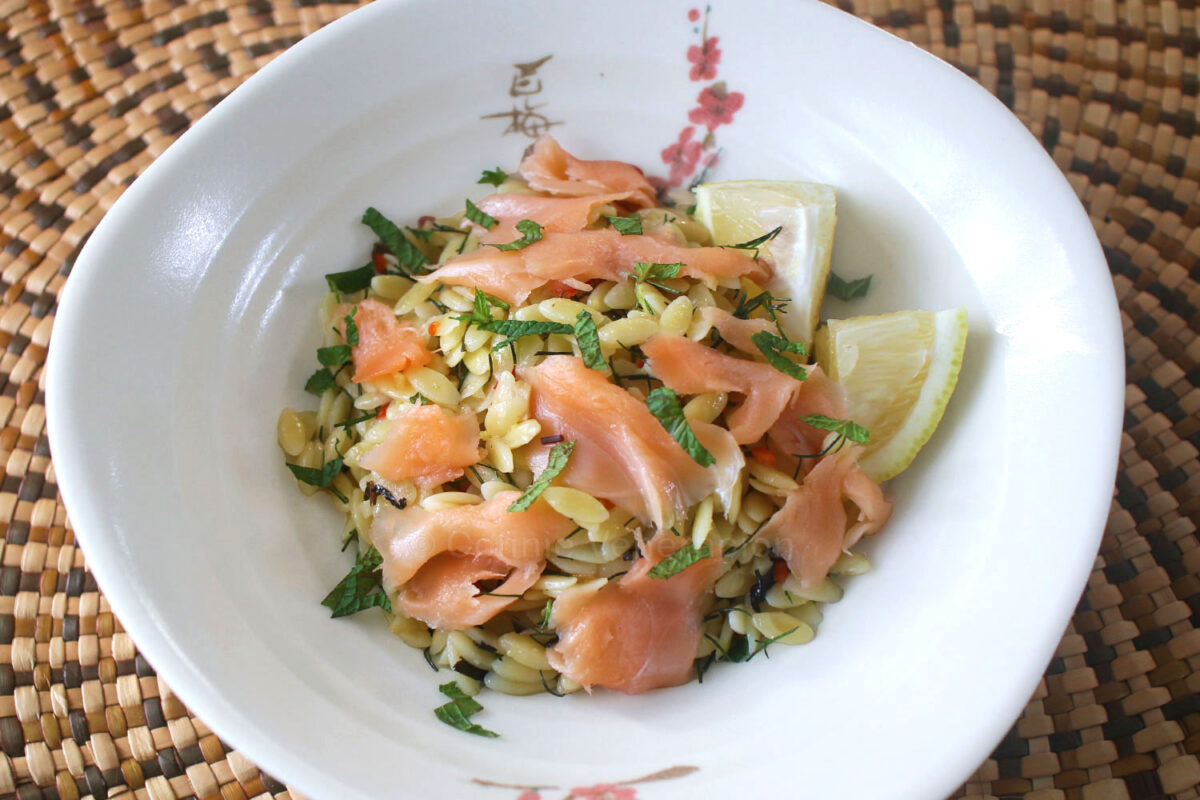
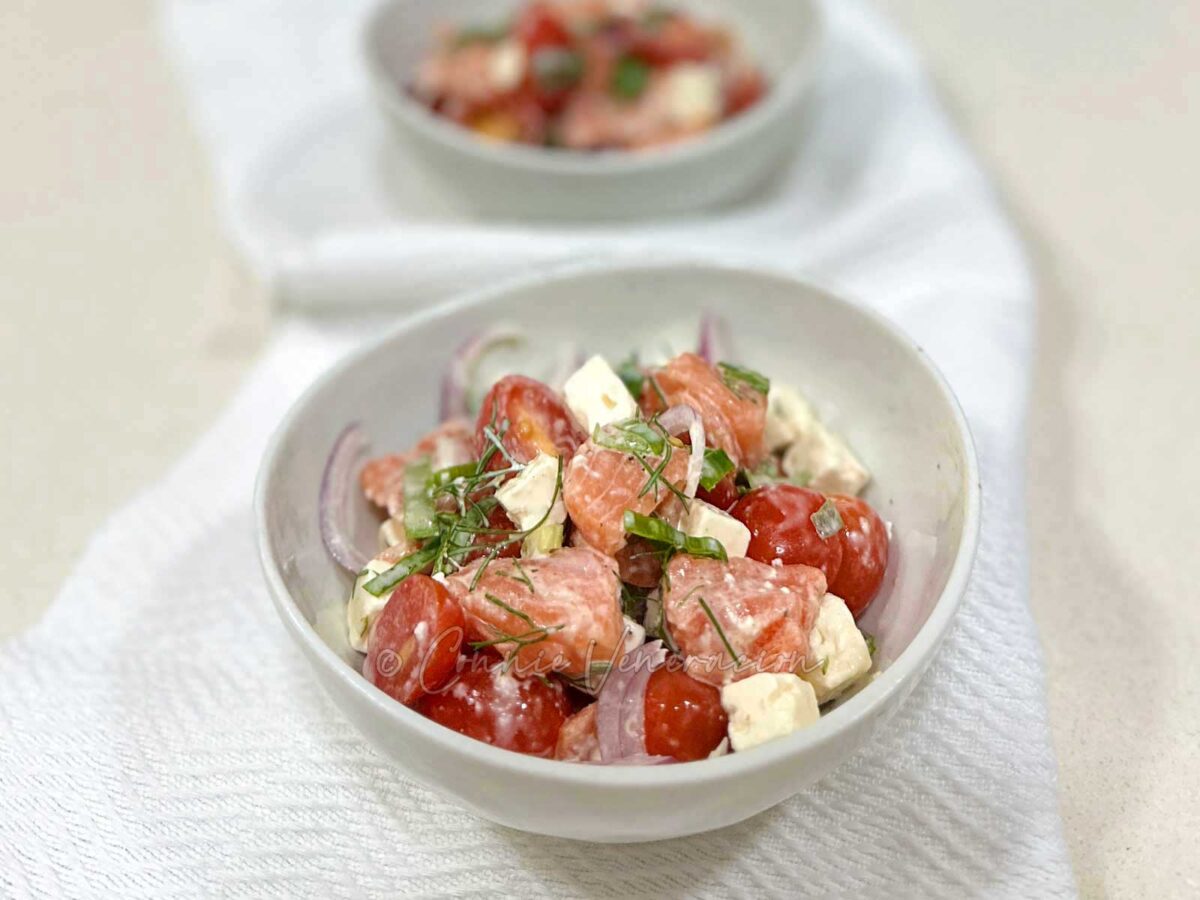
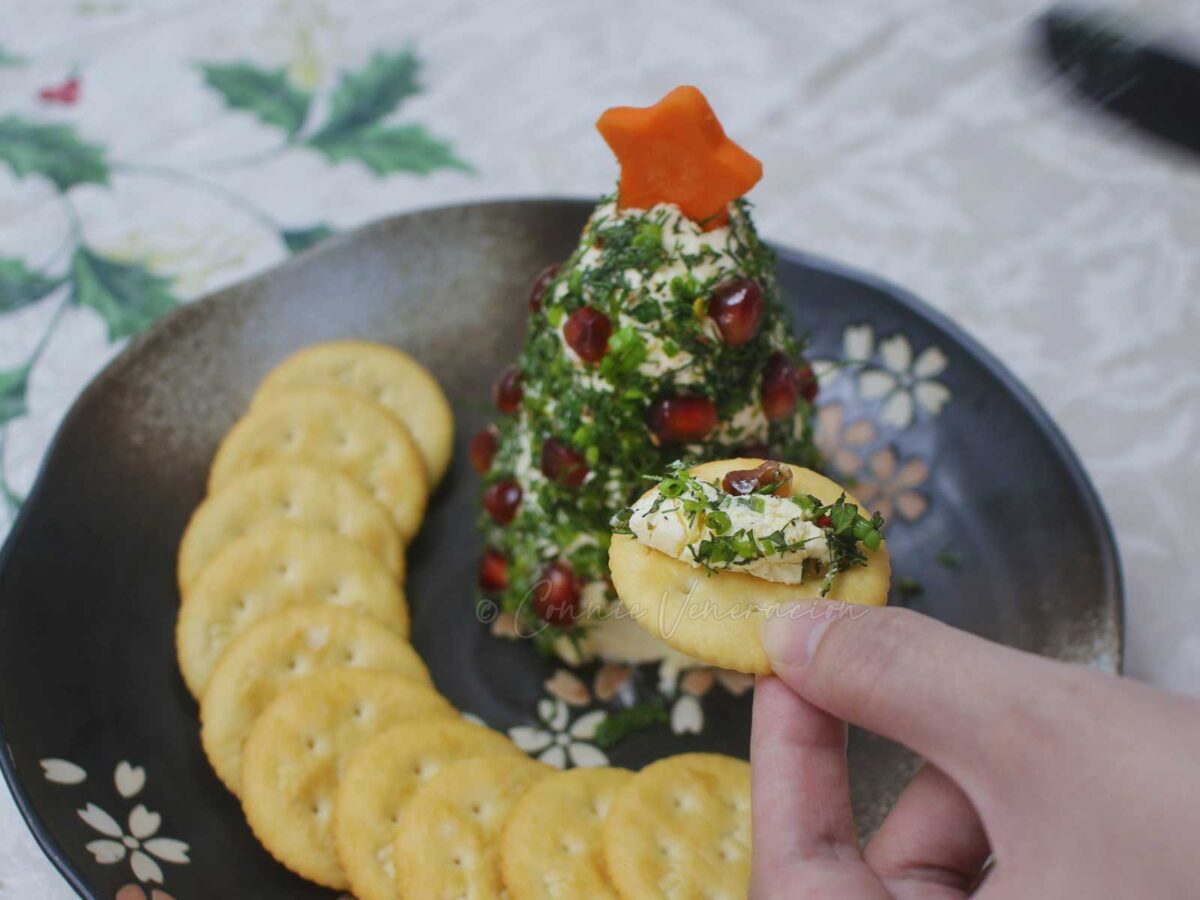
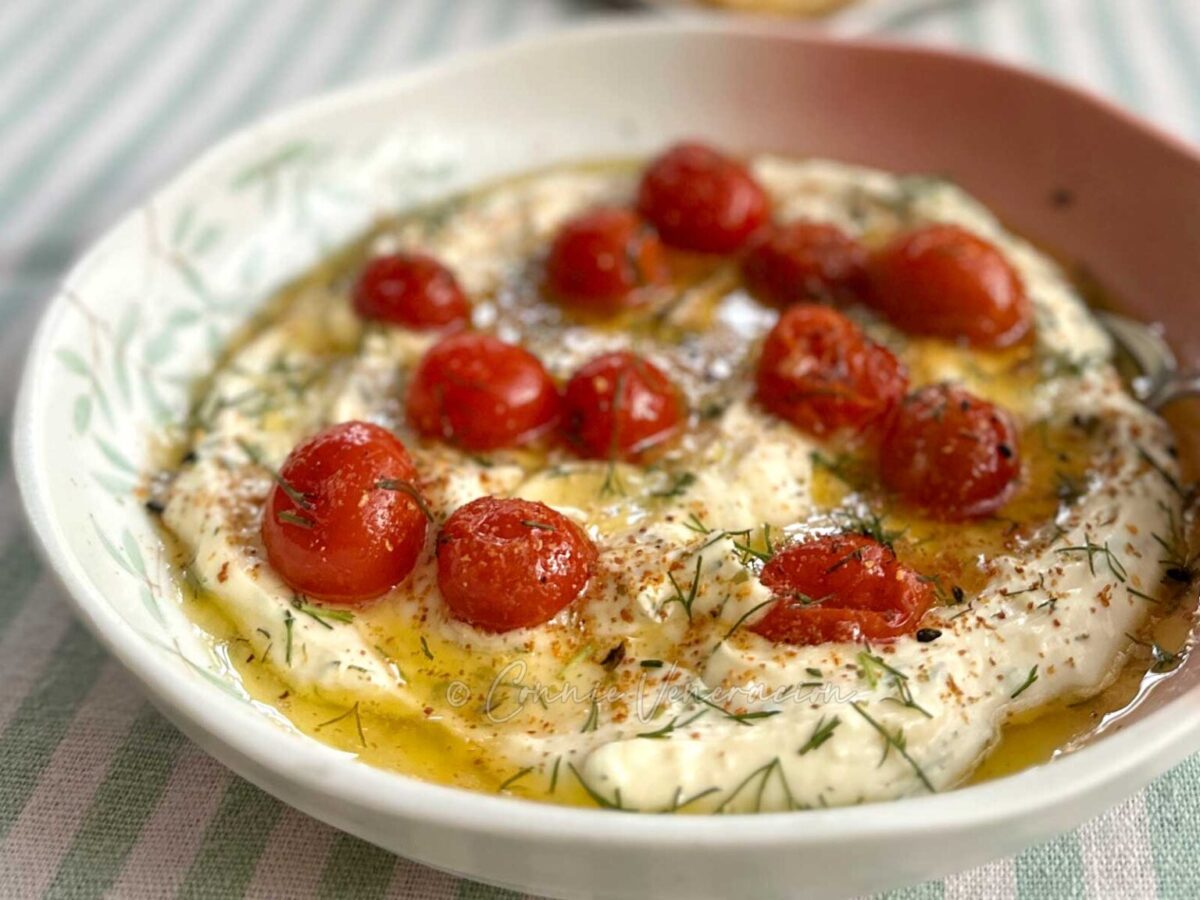
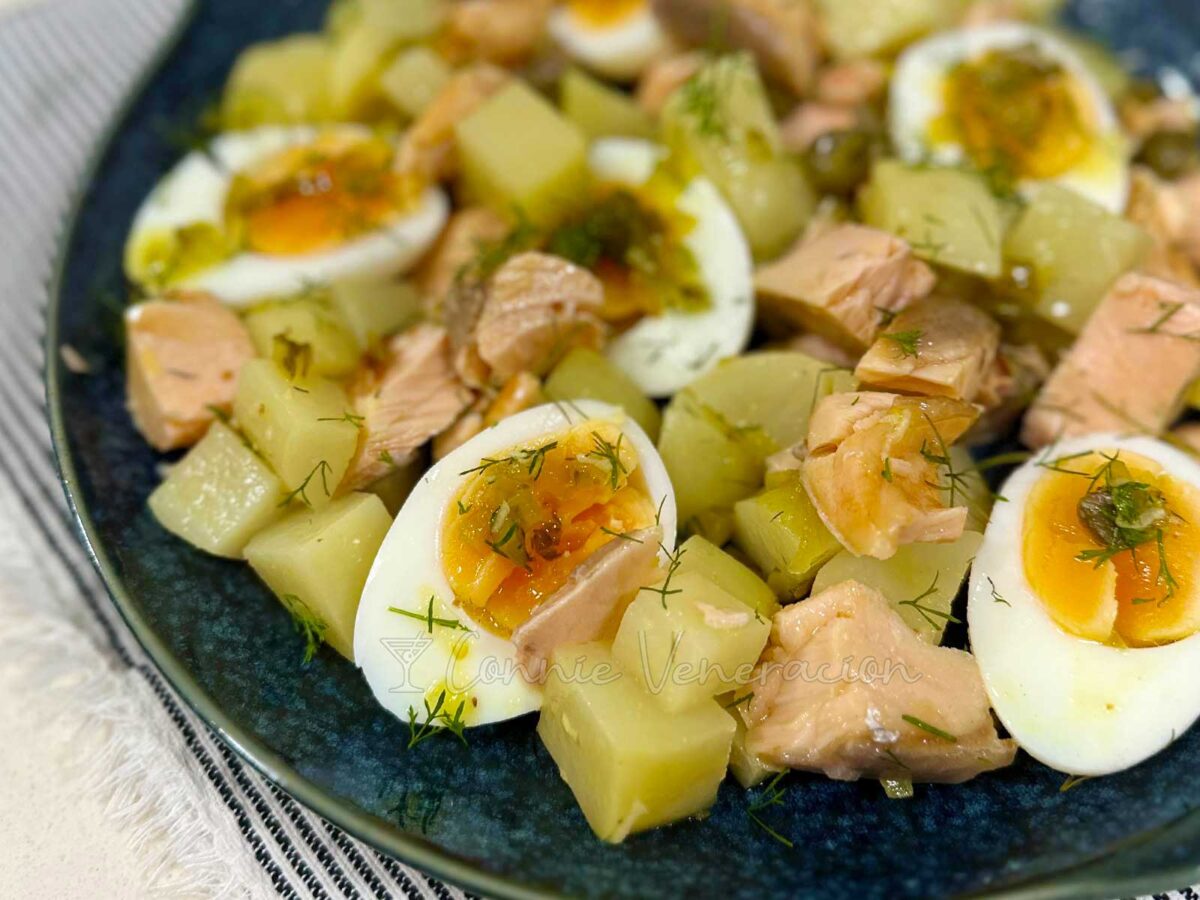
Once you have your dill leaves, you can use them in salads, salsas and dips. Whether or not you have to chop them first, finely or roughly, depends on the dish you’re making.
Recipes with dill